GENEVA: A UN watchdog on Friday slammed police shootings of blacks in the United States, days after a decision not to prosecute a white officer who shot and killed an unarmed black teen sparked nationwide protests.
With tensions still running high after Monday’s decision by a Missouri grand jury not to charge a white policeman who shot dead 18-year-old Michael Brown on August 9, the UN Committee Against Torture published conclusions from its review earlier this month of the US record.
Brown’s parents had been present at the hearing on November 12 and 13 in Geneva to discuss their son’s case with the committee members.
“The committee is concerned about numerous reports of police brutality and excessive use of force by law enforcement officials, in particular against persons belonging to certain racial and ethnic groups,” the 10-member committee said in its report.
It also lamented “racial profiling by police and immigration offices and growing militarization of policing activities.”
And it expressed “deep concern at the frequent and recurrent police shootings or fatal pursuits of unarmed black individuals.”
The committee, which periodically reviews the records of the 156 countries that have ratified the Convention Against Torture, lamented that the large delegation of high-level US officials who came to Geneva to defend the US record had provided little data on police brutality and investigations into such abuses.
It urged Washington to ensure that all cases of police brutality and excessive use of force are “investigated promptly, effectively and impartially,” that perpetrators be brought to justice and that victims receive effective remedies.
The committee also highlighted excessive use of taser guns by police, an issue that had prompted protests at the hearing earlier this month.
It said it was “concerned about numerous, consistent reports that police have used electrical discharge weapons against unarmed individuals who resist arrest or fail to comply immediately with commands, suspects fleeing minor crime scenes or even minors.”
Taser guns are weapons that deliver electric shocks and are popular with authorities because they are supposed to be nonlethal, but activists say the devices have caused more than 500 deaths in the United States.
After its first review of the United States since 2006 and the first since President Barack Obama came to power, the committee also raised a range of issues ranging from torture at CIA “black sites,” to continued detention at the US military prison at Guantanamo Bay in Cuba, prisoner abuse, and detention of illegal immigrants.
While hailing efforts to halt a range of past abuses during the so-called “War on Terror” under the previous administration of George W. Bush, the committee voiced concern over “the ongoing failure to fully investigate allegations of torture and ill-treatment of suspects held in US custody abroad.”


![]()
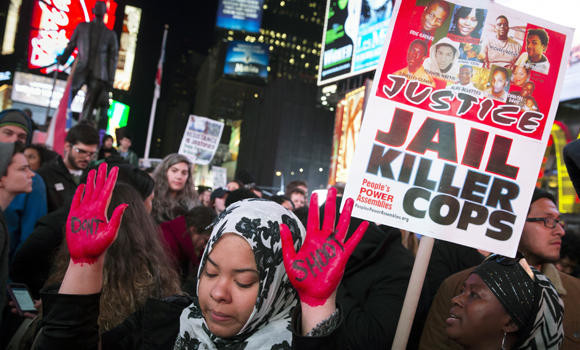

UN watchdog slams police shootings of blacks in US
UN watchdog slams police shootings of blacks in US
France moves to bar US Ambassador Charles Kushner from direct government access
- French authorities had summoned Kushner to the Quai d’Orsay, which houses the Foreign Affairs Ministry, on Monday evening but he did not show up
- Jean-Noel Barrot: ‘We reject any instrumentalization of this tragedy (killing of Quentin Deranque), which has plunged a French family into mourning, for political ends’
PARIS: France’s top diplomat Monday requested that US Ambassador Charles Kushner no longer be allowed direct access to members of the French government after he skipped a meeting to discuss comments by the Trump administration over the beating death of a far-right activist.
French authorities had summoned Kushner to the Quai d’Orsay, which houses the Foreign Affairs Ministry, on Monday evening but he did not show up, according to diplomatic sources.
Jean-Noel Barrot, the foreign affairs minister, moved to restrict Kushner’s access “in light of this apparent misunderstanding of the basic expectations of the mission of an ambassador, who has the honor of representing his country.”
The ministry, however, left the door open for reconciliation.
“It remains, of course, possible for Ambassador Charles Kushner to carry out his duties and present himself at the Quai d’Orsay, so that we may hold the diplomatic discussions needed to smooth over the irritants that can inevitably arise in a friendship spanning 250 years,” it said.
Kushner had been summoned following a statement by the State Department’s Counterterrorism Bureau, which posted on X that “reports, corroborated by the French Minister of the Interior, that Quentin Deranque was killed by left-wing militants, should concern us all.” The US Embassy had posted that statement on social media.
Deranque, a far-right activist, died of brain injuries this month from a beating in the French city of Lyon. He was attacked during a fight on the margins of a student meeting where a far-left lawmaker was a keynote speaker.
His killing highlighted a climate of deep political tension ahead of next year’s presidential vote.
“We reject any instrumentalization of this tragedy, which has plunged a French family into mourning, for political ends,” Barrot said over the weekend. “We have no lessons to learn, particularly on the issue of violence, from the international reactionary movement.”
The State Department said in its post that “violent radical leftism is on the rise and its role in Quentin Deranque’s death demonstrates the threat it poses to public safety. We will continue to monitor the situation and expect to see the perpetrators of violence brought to justice.”
Kushner was summoned in August over his letter to French President Emmanuel Macron alleging the country did not do enough to combat antisemitism. France’s foreign officials met with a representative of the US ambassador since the diplomat did not show up.
French authorities had summoned Kushner to the Quai d’Orsay, which houses the Foreign Affairs Ministry, on Monday evening but he did not show up, according to diplomatic sources.
Jean-Noel Barrot, the foreign affairs minister, moved to restrict Kushner’s access “in light of this apparent misunderstanding of the basic expectations of the mission of an ambassador, who has the honor of representing his country.”
The ministry, however, left the door open for reconciliation.
“It remains, of course, possible for Ambassador Charles Kushner to carry out his duties and present himself at the Quai d’Orsay, so that we may hold the diplomatic discussions needed to smooth over the irritants that can inevitably arise in a friendship spanning 250 years,” it said.
Kushner had been summoned following a statement by the State Department’s Counterterrorism Bureau, which posted on X that “reports, corroborated by the French Minister of the Interior, that Quentin Deranque was killed by left-wing militants, should concern us all.” The US Embassy had posted that statement on social media.
Deranque, a far-right activist, died of brain injuries this month from a beating in the French city of Lyon. He was attacked during a fight on the margins of a student meeting where a far-left lawmaker was a keynote speaker.
His killing highlighted a climate of deep political tension ahead of next year’s presidential vote.
“We reject any instrumentalization of this tragedy, which has plunged a French family into mourning, for political ends,” Barrot said over the weekend. “We have no lessons to learn, particularly on the issue of violence, from the international reactionary movement.”
The State Department said in its post that “violent radical leftism is on the rise and its role in Quentin Deranque’s death demonstrates the threat it poses to public safety. We will continue to monitor the situation and expect to see the perpetrators of violence brought to justice.”
Kushner was summoned in August over his letter to French President Emmanuel Macron alleging the country did not do enough to combat antisemitism. France’s foreign officials met with a representative of the US ambassador since the diplomat did not show up.
Latest updates


Recommended


© 2026 SAUDI RESEARCH & PUBLISHING COMPANY, All Rights Reserved And subject to Terms of Use Agreement.