RIYADH: Saudi Arabia is advancing into a new phase in the development of its water sector, leveraging the advanced capabilities it has built in integrated water management and enhanced sector efficiency to establish a coordinated national industry.
Building on the sector's maturity, strong demand, availability of production inputs, and expertise, the Kingdom is transforming local demand into industrial and investment opportunities that contribute to technology and knowledge transfer, strengthen supply chain reliability and water security, and build national capabilities for development and regional and global competitiveness, according to the Saudi Press Agency.
Water-sector opportunities
The Water Industries and Services Localization Program includes 18 investment opportunities to localize 18 components, representing approximately 90 percent of the water industry's core components, enabling the sector to move from securing products to developing the capability to manufacture and advance them domestically.
Cumulative local demand for these opportunities is expected to exceed SR15 billion ($4 billion) through 2033, while demand across the Middle East and North Africa is estimated at approximately SR65 billion, providing the targeted industries with a solid demand base that supports their domestic growth and regional and global expansion.
As part of this pivotal transformation, the Saudi Water Authority announced, during the “Localizing the Water Industry: Knowledge Transfer and Capacity Building” ceremony held at the InterContinental Riyadh, in the presence of a number of ministers, government leaders, ambassadors, and CEOs, that six investment opportunities have moved into the industrial implementation phase, including five new opportunities.
This was marked by the signing of three industrial localization agreements and the inauguration of two factories.
The deals provide for the establishment of seven factories, bringing total investment across the six opportunities to SR2.8 billion and moving localization from presenting opportunities to implement projects and building local industrial and technological capabilities.
This approach is centered on transforming the strength of demand in the water sector into a driver of manufacturing and investment by aligning project requirements and future demand with local production opportunities.
This provides investors and global manufacturers with greater visibility into the scale of demand and encourages them to transfer knowledge and technology and localize manufacturing in the Kingdom, supported by the industrial and investment ecosystems.
Its attractiveness is further strengthened by the availability of at least 70 percent of the production inputs required for the targeted components within the Kingdom, the expansion of the supplier base from 739 suppliers in 2022 to 3,441 suppliers in 2026, and the increase in the sector's local content from 45 percent in 2020 to 68.27 percent in the first half of 2026.
These factors reinforce Saudi Arabia's position as an industrial base capable of rapid growth and regional and international expansion.
Localization goes beyond moving production lines to Saudi Arabia. It also includes research and development, knowledge and technology transfer, and building the skills needed to operate and further develop these industries. T
he agreements require at least 70 percent of employees in specialized positions to be part of the workforce, directly linking industrial investment to the development of national engineering and technical talent.
The industries targeted for localization include reverse osmosis membranes, antiscalants, and membrane cleaning chemicals, as well as energy recovery devices, high-pressure pumps, Distributed Control Systems, and Supervisory Control and Data Acquisition systems, forming an interconnected industrial and technological value chain that supports water production processes and facility operations.
Several of these components also have applications across the energy, mining, agriculture, and food industries, expanding the impact of localization across multiple value chains.
These initiatives reflect the Kingdom's growing position on the global water technology manufacturing landscape and the strength of its strategic partnerships.
They include four Italmatch Chemicals factories in Wa'ad Al Shamal, Jubail, and Jeddah, with Wa'ad Al Shamal set to host the company's largest industrial complex outside the Italian Republic. The four factories are scheduled to begin production in 2028.
The projects also include a Torishima high-pressure pump factory in Jeddah; an Energy Recovery factory for energy recovery devices in Dammam, the company's only manufacturing facility outside the US; and an alfanar factory in Riyadh for the production of Distributed Control Systems, bringing the number of factories associated with opportunities that have moved into implementation to seven.
From its facility in the Kingdom, the Energy Recovery factory is expected to supply approximately one-third of the company's customers worldwide beginning in the first quarter of 2027. These projects are distributed across several regions of the Kingdom, supporting the integration of value chains and enhancing the export potential of locally manufactured products.
The industries are currently being localized, built on industrial capabilities that have already entered production.
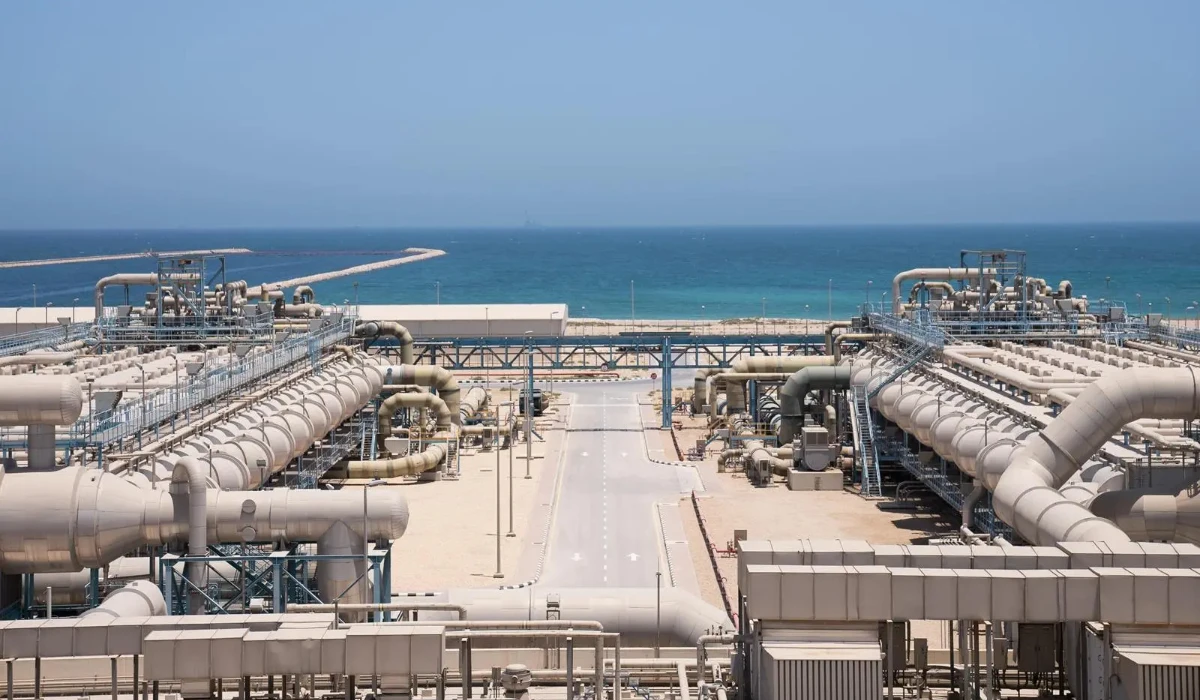
Toray's reverse osmosis membrane factory in Dammam began production in 2025 as the largest manufacturing facility for desalination membrane technologies in the Middle East and the company's second facility of its kind outside Japan, bringing the total number of factories associated with the localization program to eight.
Knowledge exchange with global manufacturers has also delivered measurable improvements in operational efficiency.
High-pressure pump efficiency has reached 91 percent, while the development of locally produced reverse osmosis membranes contributed to increasing the production capacity of the Al Khobar plant from 600,000 to 700,000 cubic meters per day at no additional cost, demonstrating the impact of knowledge transfer and technological development in improving asset efficiency and maximizing their utilization.
The value of localization has extended beyond meeting domestic demand to international exports.
The Kingdom has achieved self-sufficiency in locally producing reverse osmosis membranes and has exported them to 27 countries. The program also aims to reduce lead times for key components by 50 to 70 percent, strengthening supply chain resilience and enhancing operational reliability and the continuity of water services.
Economic impact
The six opportunities that have moved into implementation are expected to contribute approximately SR4.36 billion to the gross domestic product through 2033, while creating 3,090 direct and indirect specialized engineering and technical jobs and reducing the cost of targeted products by 20 to 30 percent.
Local demand associated with these opportunities amounts to approximately SR11.37 billion, with targets to export between 20 and 50 percent of production, depending on the nature of the product and the scale of external demand.
Across the full localization program, attracted investments are expected to reach approximately SR11 billion by 2033. The program also aims to create approximately 12,000 direct and indirect specialized engineering and technical job opportunities, strengthening local content, developing national capabilities, attracting investment, and expanding the industrial base.
The integration of water, industry, investment, and local content development objectives demonstrates the Kingdom's ability to transform the maturity of its water sector and the strength of its demand into sustainable economic and technological value.
This transformation strengthens water security and supply chain reliability and moves Saudi Arabia from consuming technologies to manufacturing, developing, and exporting them.
In doing so, it further advances the Kingdom's leadership in integrated water management, reinforces its industrial capabilities, and consolidates its position as a regional hub for water technology manufacturing, in alignment with the objectives of Saudi Vision 2030, the National Water Strategy, and the National Industrial Strategy
Saudi Arabia advances water industry localization with $747m investment