- The city's improvement is attributed to strong performance in human capital (ranked 4th globally) and economics (ranked 18th).
- Riyadh is one of only two Middle Eastern cities in the top 50, alongside Dubai, which is ranked 42nd.
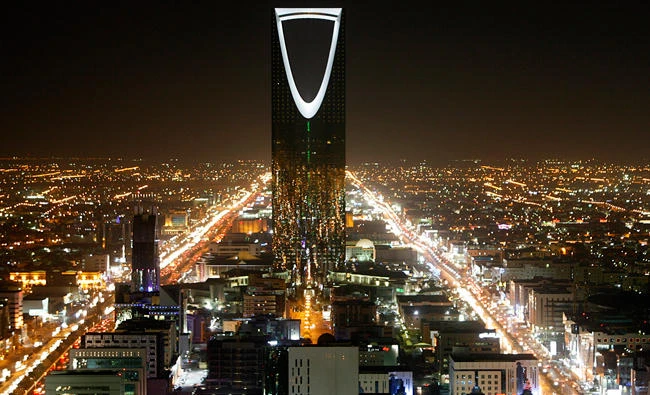
RIYADH: Saudi Arabia's capital has entered the top 50 of the Oxford Economics Global Cities Index for the first time, jumping 47 places thanks to strong ratings for human capital and economics.
Riyadh was placed 50th in the 2026 list, becoming one of only two Middle Eastern cities in the world’s top 50, with Dubai ranked 42nd.
The Saudi capital has seen its place in the index rise dramatically in recent years, up from 118th in 2024 and 97th in 2025.
Riyadh created more jobs over the past five years than any other city globally, according to Oxford Economics.
Its economy expanded at an average rate of more than 11 percent a year over the period, making it the eighth-fastest-growing city economy in the index.
The ranking comes after the latest Global Financial Centres Index, released by Z/Yen Partners in collaboration with the China Development Institute, also showed Riyadh gaining ground, with the capital rising 15 places to 46th globally.
“Riyadh has been more shielded than other Middle Eastern cities from the US-Iran conflict, displaying notable resilience to the disruption caused,” Oxford Economics said in its latest report.
Over the past few decades, Riyadh has been the only city in the Middle East not to record an annual decline in GDP growth, Oxford Economics said, highlighting the trajectory created by diversification efforts, targeted investment and policymaking.
The city’s overall score was driven by its performance in Human Capital, where it ranked fourth globally, and Economics, where it ranked 18th, according to Oxford Economics.
Economic transformation
Hamza Dweik, head of trading for the Middle East and North Africa at Saxo Bank, said Riyadh’s rise reflects the pace at which its economic profile is changing.
“What we are seeing is the result of several years of investment aimed at broadening the economic base, creating employment and increasing Riyadh’s ability to attract businesses, capital, and skilled professionals,” he added.
Thomas Kuruvilla, managing partner of Arthur D. Little Middle East & India, said Riyadh’s entry into the top 50 marked an important milestone in the Kingdom’s transformation.
“Riyadh’s rise demonstrates how national ambition is translating into tangible outcomes, creating momentum that can support the city’s continued progress toward becoming one of the world’s leading global cities,” Kuruvilla told Arab News.
He said the city’s progress is increasingly visible across economic activity, employment, tourism, infrastructure and its ability to attract international businesses and talent.
Tony Hallside, CEO of STP Partners, said Riyadh’s rise reflected the scale and pace of its economic transformation.
“What is particularly significant is the breadth of that growth, spanning infrastructure, tourism, technology and new industries, and the opportunities this is creating for businesses, investors and talent,” Hallside said.
Riyadh is increasingly being viewed not only as a base for accessing opportunities across Saudi Arabia but also as a major regional business center in its own right, he added.
Jobs, population and non-oil growth
Anil Singh, chief business officer at TASC Outsourcing, said Saudi Arabia’s workforce strategy has helped ensure that economic growth translates into opportunities for local talent.
“Saudization, alongside investment in skills and private sector participation, has helped build a much larger base of Saudi professionals across industries that are expanding rapidly,” Singh said.
Riyadh’s population increased from 6.7 million in 2021 to almost 8.6 million by the end of 2025, while tourism numbers more than doubled and about 3 million jobs were added, according to the report.
Oxford Economics also highlighted the shift away from oil, with its contribution to Saudi Arabia’s economy declining over the past two decades as non-oil sectors have expanded under Vision 2030.
Vijay Valecha, chief investment officer at Century Financial, attributed Riyadh’s growth to government leadership, financial management and the business environment.
“Riyadh has successfully built the core infrastructure and institutional frameworks that characterise globally competitive cities,” Valecha said.
The Regional Headquarters Program has also helped strengthen Riyadh’s position as a regional business hub, Oxford Economics said. The capital is now home to more than 700 international firms.
Foreign-born residents account for just under 60 percent of Riyadh’s population, according to the report, contributing to one of the youngest age profiles among major cities and strong population and employment growth.
“As the city attracts greater private-sector participation and international capital, its position among the world’s leading city economies is likely to strengthen further,” said Hallside.
Outlook to 2050
Oxford Economics expects Riyadh to remain the Middle East’s largest city economy by 2030. By 2050, the capital is projected to overtake Singapore and Osaka-Kyoto to become the world’s 30th-largest city economy.
Riyadh is also forecast to add more industrial jobs over the next 25 years than any other city in the index.
Together with Dubai, Abu Dhabi and Doha, the capital is expected to add more than 1.8 million business-services jobs between 2025 and 2050 — about 750,000 more than New York, London, Paris and Berlin combined.
“The next evolution of Riyadh as a global city will be reflected not only in its ability to attract people and investment, but also in its ability to create an environment where talent chooses to stay, innovate, build businesses and establish long-term roots,” Kuruvilla said.