- Karishma Ali hopes to now provide a platform for more girls to participate in sports
- Has earned several accolades for the country, including being featured in Forbes 30 under 30
ISLAMABAD: Twenty two-year-old Karishma Ali is used to a lot of firsts.
She was the first girl from her hometown of lower Chitral to represent Pakistan in football at both the national and international levels.
She took part in the Jubilee Games in Dubai, UAE three years ago and also represented Pakistan’s women football team in the Australian Football International (AFL) Cup.
Ali is also the first from Chitral to be featured on Forbes Asia’s 30 under 30 list.
Now, she has her eyes set on realizing her dream of seeing more girls participating in sports. For this purpose, she established the Chitral Women’s Sport Club (CWSC), the region’s first.
She says it all began when she kicked her first football at the age of nine. “I didn’t properly play football, but I became a football lover back then when I was a little kid,” Ali told Arab News. “I remember watching the World Cup with my father in 2006 and fell in love with the game.”
Ali’s decision to foray into sports was supported by her family, particularly her father, who always pushed her to excel in the game.
In Pakistan, women’s participation in sports is abysmal, mostly due to cultural restraints, patriarchal and conservative attitude, and a lack of infrastructure. For her part, Ali says she factored in all these conditions before taking the leap.
“In Chitral, there was no facility and there is still no facility for girls — which is why I am working on it,” Ali told Arab News, adding that she “never had the opportunities to play football.”
“The only time I would get to play football in Chitral was when I would go on a picnic with my father or rarely with my classmates. The boys would be playing, I would come and kick, they would stare at me, laugh and bully me but I never cared — I still went for it,” she said.
And while she had the backing of her family – and the support of coaches and mentors after moving to Islamabad at the age of 13, leading to her eventual placement on the national team – Ali says that, initially at least, the community was not receptive to the idea of girls playing sports.
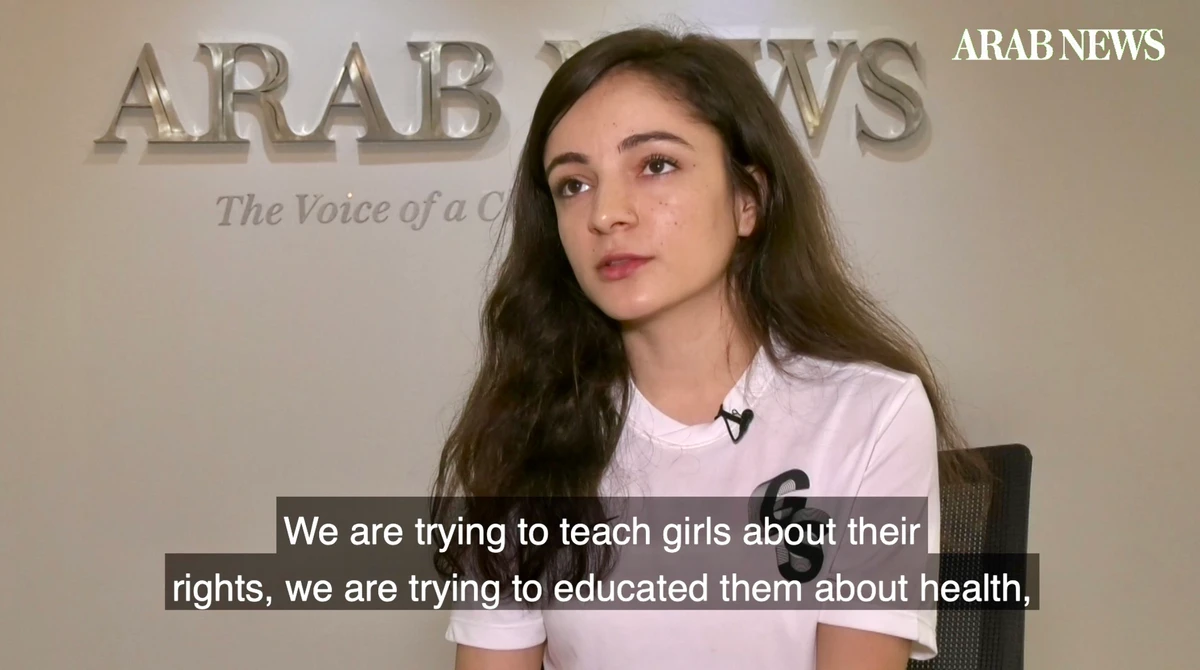
“A lot of people do not appreciate the inclusion of girls in sports, so for me I thought starting [this club] and making it for girls under the age of 16 would be crucial,” she said, adding that the sports club “is not just about sports or football.”
“We are trying to teach girls about their rights, we are trying to educate them about health,” she said.
Last year, the CWSC hosted a seven-day camp for 70 girls from across Chitral and surroundings villages, resulting in the first all-women football tournament in the area.
Ali’s aim is to not just encourage athleticism, competition and confidence among young girls, but to also demonstrate how the sport can empower women and be a source of pride for the country.
“Last year [starting out] was very hard, when I told people I wanted to do this in Chitral, people thought I was crazy,” she said. “People never appreciated that I was playing sports to begin with, so to want to invite others in… I was bullied and threatened.”
However, Ali found strength in her usual source – her father. “[He] said to me: ‘You have taken this step for so many girls and, now, if you give up, that means the end of sports for every other girl back home. You decide whether you can be brave and keep fighting or people will forget you. Remember, if you stand up people will remember you, people will get inspired and get their girls involved’,” she said.
And they did.
From among the 70 girls who enrolled in the club, several live in villages and would commute for three to four hours every day just to participate.
“They would not miss the training session even for a single day and would wake up at 6am to reach the ground, play sports and go back,” Ali said of the girls, teeming with pride.
This year, Ali’s camp hosted nearly 200 girls, more than doubling last year’s attendance.
For her party, Ali, who has earned herself the “Pride of Pakistan” award that recognizes tremendous contribution made by Pakistanis, wants the same for other girls, too.
“I remember when I was a kid watching the World Cup with my cousin, I’d told him I want to play for the national team, but there was no such concept of girls playing football. When I got to the national team I sank into this confidence,” she said.
“I think of the little girl back in the village and myself in the national uniform and that fills me with happiness. We have amazing people, we have girls who want to play sports and for Pakistan and I want to be a good ambassador for them,” she said.