- PEMRA notice advises TV channels to refrain from poking fun at political figures and law enforcement agencies
- Comedians and critics say have faced similar censure in the past but this week’s advisory felt more severe
ISLAMABAD: Embattled comedians have decried a notice by the Pakistani media regulator ‘advising’ TV channels not to broadcast satire, calling it an attack on freedom of speech and a sign of growing censorship in an industry already in disarray because of state pressure.
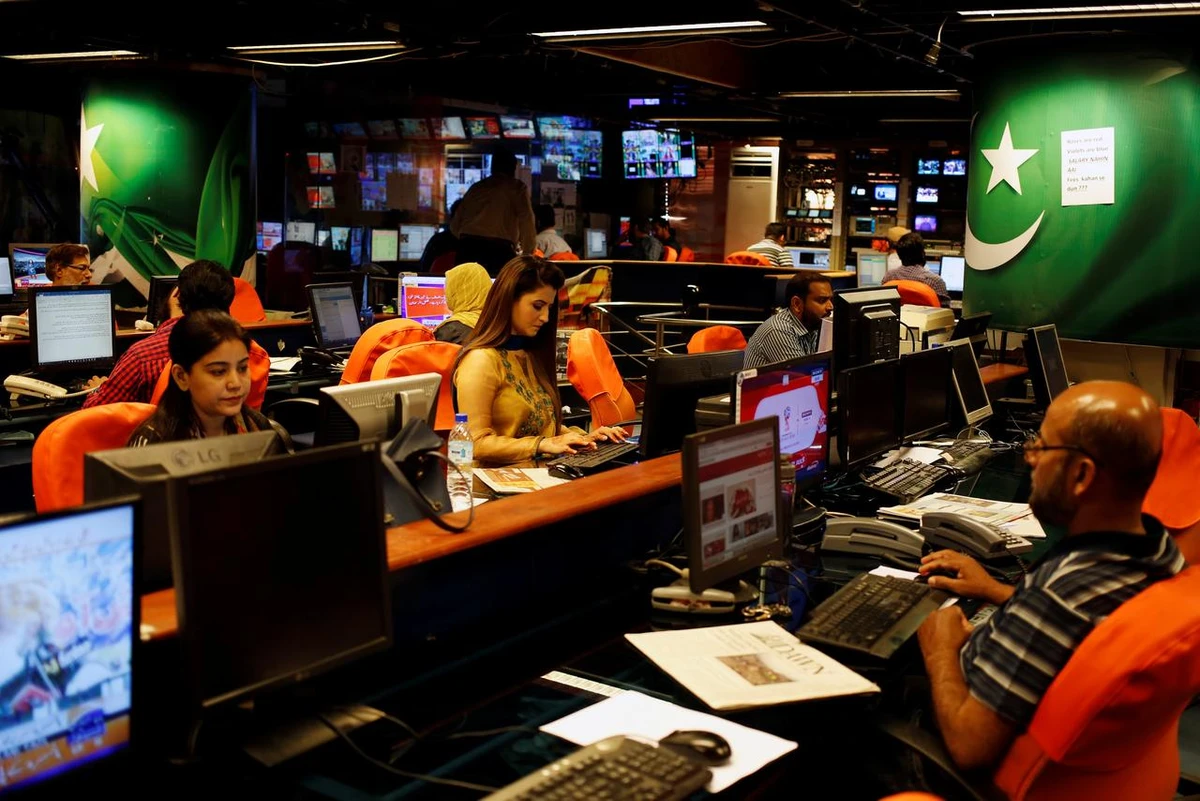
Pakistan’s media was widely seen as among the region’s most vibrant after military rule ended in 2008, but newspaper and TV journalists now widely say a crackdown that began in the run-up to last year’s general election has widened into widespread censorship and self-censorship by journalists fearful of the repercussions of criticizing the government, the military or the courts.
In a new blow to media freedom, the Pakistan Electronic Media Regulatory Authority (PEMRA) issued a notice this week advising TV channels to refrain from using “caricatures, animated characters, photo-shopped images and funny memes” that poked fun at political figures or law enforcement agencies.
“Public sentiments are agonized by the trend of demeaning leadership of the country,” the PEMRA notice said.
Pakistani comedians say they have faced similar censure in the past but this week’s advisory felt more severe.
“It has happened to media and comedians before us and it will happen after us, but this time it’s very intense because there is an atmosphere that no comedy or satire will be tolerated,” Shafaat Ali, a comedian who rose to fame in 2016 for his impressions of then cricketer-turned-politician Imran Khan.
“A society that cannot make fun of itself can’t be a healthy society,” he added, saying comedy offered a light-hearted way of creating awareness about difficult political and social issues.
In October 2018, Ali said an advertisement he had made for an online shopping brand and in which he mimicked PM Khan had been ordered to be taken off air by PEMRA.
With no shows listed and examples of problematic satire specified in the PEMRA memo, Junaid Saleem, host of the wildly popular satirical news show Hasb-e-Haal, said the regulator was being purposely vague to mount pressure on TV channels.
“PEMRA might have genuine complaints and it would be easy to address those concerns if PEMRA had shared or pinpointed those events, but this notification reflects (PEMRA) is trying to pressurize media,” he said. “These kind of notices are a continuity of the government policing free speech.”
The government has repeatedly denied it is censoring journalists, as the country's media crisis has recently seen closures of news channels and newspapers, with leading organizations cutting staff and salaries by up to 40 percent. Satirical TV content and social media videos have thus offered new space to journalists.
In this context, penalizing humor was a "worrying sign," pop culture writer Ahmer Naqvi said.
“It suggests that those in charge believe their stature and work is so important and necessary that it can't be taken lightly, and doing so must be punished,” he said. “Such an inflated sense of self would see the slightest deviation from its approach, even a joke, to be unacceptable.”
“I have drawn caricatures of politicians across political parties for years, and never has there been a peep from a political party -- until now,” political cartoonist Saadia Gardezi told Arab News. “To me, that means something has changed in this new era, and not for the better.”