- Last IMF bailout signed in 2014 carried a 2 percent interest rate, was repayable after 30 years
- Under IMF’s terms, government is expected to let rupee fall to correct current account deficit
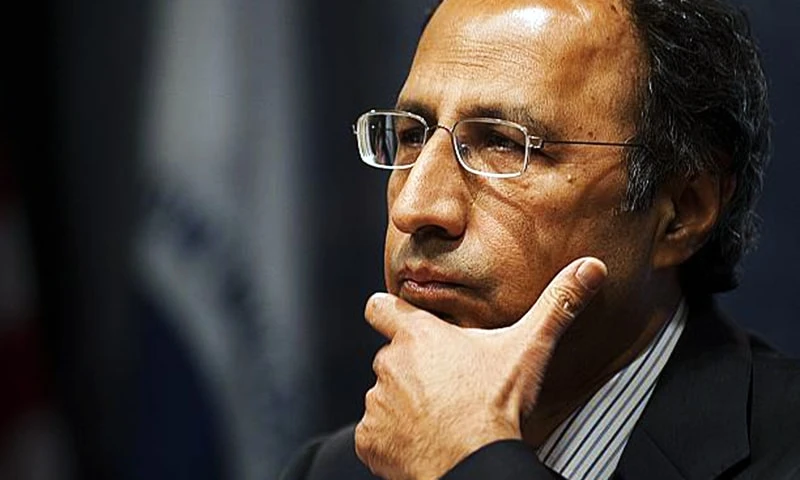
KARACHI: The finance adviser to the Pakistani prime minister said on Saturday a $6 billion bailout loan secured from the International Monetary Fund this month carried an interest rate of 3.2 percent.
Under the IMF’s terms, the government is expected to let the rupee fall to help correct an unsustainable current account deficit and cut its debt while trying to expand the tax base in a country where only one percent of people file returns.
“The program we have obtained has a magnitude of $6 billion and is spread over three years,” finance adviser Abdul Hafeez Shaik said at a press conference. “The good thing about it is that the rate of borrowing is much lower than other programs. The interest rate is 3.2 percent.”
The country’s last IMF bailout, signed in 2014, carried a 2 percent interest rate and was repayable after 30 years.
Pakistan’s foreign currency reserves currently stand at around $8 billion, not enough to cover three months of imports, making the country desperate for the IMF board to give its blessing for the release of the first tranche of the loan.
Signing the IMF program would “send a good signal to the international community that Pakistan wishes to take its economy forward in a disciplined manner and people will find incentive to form alliances and partnerships with us,” Shaikh said, adding that the country would also now be able to get $2-3 billion in loans from the World Bank and the Asian Development Bank.
Shaikh has to present a 2019/20 budget next month, having been told by the IMF that the primary budget deficit — excluding interest payments — should be cut to 0.6 percent of GDP, implying a $5 billion reduction from the current projection for a deficit of 2.2 percent.
“In the coming days important decisions would be taken for the improvement of the country’s economy,” he said. “The difficult time is about to end and the coming year would be a year of stability.”
Inflation at its highest in more than five years has shocked many Pakistanis who voted for Prime Minister Imran Khan and his promise to eradicate poverty, create jobs and build an Islamic welfare state. This month, the central bank has hiked its key interest rate by 150 basis points to 12.25 percent even though the economy is slowing and millions of people are struggling to find work.
“The government will take steps to protect vulnerable segments,” the finance adviser said.