

No good news as Pakistan’s much hyped offshore drilling goes water wet

Photo Caption: Government announced that an offshore drilling in Arabian Seas has failed to yield huge oil and gas reserves as joint venture partners including US exploration giant ExxonMobil approve plug and abandon operation – (Photo – Ministry of petroleum)
Updated 20 May 2019
Follow

No good news as Pakistan’s much hyped offshore drilling goes water wet

  • The $100 million drilling project will be plugged in and abandoned in coming days
  • Announcement came hours after Prime Minister Khan told the country to expect good news

KARACHI: Pakistan on Saturday officially announced that its much publicized offshore drilling in the Arabian Sea at Kekra-1 failed to yield huge oil and gas reserves, as joint venture partners including US exploration giant ExxonMobil decided to plug the well and abandon the operation.
According to a ministry of petroleum press release, after four months of drilling to 5,492 meters, the log results showed “a good quality reservoir but unfortunately water wet without any gas effect.”
The official announcement came just hours after Prime Minister Imran Khan told the country to expect good news regarding the discovery of huge energy deposits off the Karachi coast.
“It is possible that we could find such a massive gas reserve that Pakistan would never have to purchase gas from outside,” Khan told an audience in Peshawar on Saturday evening, amid news that gas tariffs in the country would be increased by 47%.
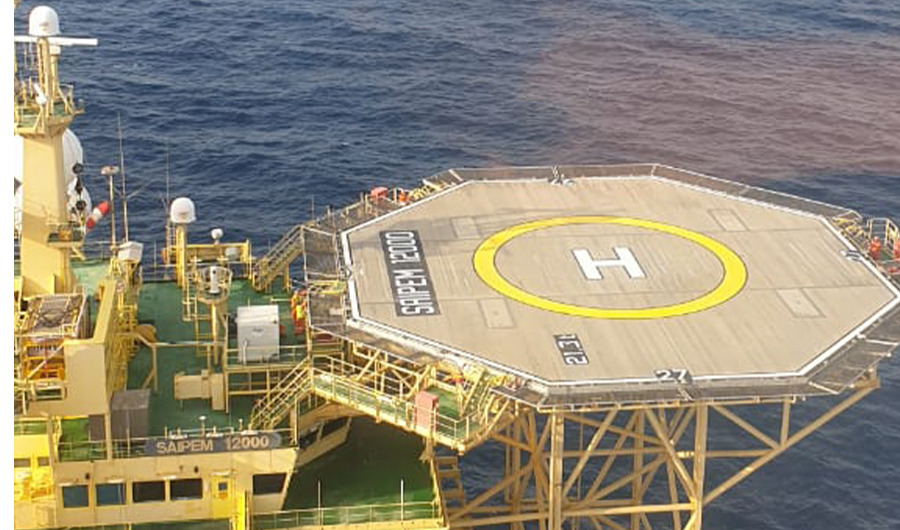

The drilling, which had received months of political hype, was Pakistan’s 17th attempt at hitting oil and gas reserves and cost $100 million. Officials of the petroleum division maintain that the data received from the drilling will be useful for future exploration in the region.
In May 2018, ExxonMobil bought a 25 percent stake in offshore drilling in Pakistan, and hopes for the discovery of large reserves was first kindled in August 2018 when the then caretaker minister for maritime and foreign affairs, Abdullah Hussain Haroon, said the country was expected to hit reserves even bigger than Kuwait.
It was estimated that if oil deposits were discovered as expected, Pakistan would be among the world’s top ten oil-producing countries.


Pakistani president arrives in Iraq to deepen trade, energy cooperation

Updated 20 December 2025
Follow

Pakistani president arrives in Iraq to deepen trade, energy cooperation

  • Visit follows recent high-level contacts as Islamabad seeks to expand limited commercial ties with Baghdad
  • Talks are expected to cover investment, manpower and facilitation of Pakistani pilgrims visiting holy sites in Iraq

ISLAMABAD: President Asif Ali Zardari arrived in Iraq on Saturday on an official visit aimed at expanding cooperation in trade, energy and investment, as Pakistan seeks to deepen ties with Baghdad after years of limited engagement.

Pakistan and Iraq established diplomatic relations in 1947 and have traditionally maintained cordial ties, though commercial links remain modest, with officials and business groups identifying scope for cooperation in construction services, pharmaceuticals, manpower and agricultural exports.

“President Asif Ali Zardari arrived in Baghdad on a four-day official visit to Iraq,” his office said in a post on X. “He was received by Culture Minister Dr. Ahmed Fakkak Al-Badrani. During the visit, meetings with senior Iraqi leadership are expected to advance cooperation and further strengthen Pakistan-Iraq relations.”

Zardari’s visit follows a series of recent high-level contacts between the two countries, reflecting efforts to broaden bilateral engagement beyond traditional diplomatic ties and explore collaboration across economic, political and people-to-people domains.

According to Pakistan’s foreign office, the president is expected to hold meetings with Iraq’s senior leadership to discuss cooperation in various areas such as trade and investment, energy, technology, education and manpower.

He is also expected to discuss regional and international issues with Iraqi officials.

Earlier this month, Pakistan’s Interior Minister Mohsin Naqvi met his Iraqi counterpart, Abdul Ameer Al-Shammari, on the sidelines of meetings in Brussels, where both sides agreed to enhance cooperation on security and facilitate travel for Pakistani Shia pilgrims to Najaf and Karbala.

The two officials discussed measures to ensure the smoother movement of these pilgrims and their compliance with visa regulations.