- Four-day Chilam Joshi festival concluded on Friday in mountainous Chitral, a magnet for tourists
- Kalash community claims descent from Alexander the Great’s army, brews its own wine and women are not veiled
PESHAWAR: Nestled among the valleys of Pakistan’s mountainous northwest, a tiny religious community that claims descent from Alexander the Great’s army this week celebrated a four-day festival to mark the arrival of spring after eight months of harsh winter.
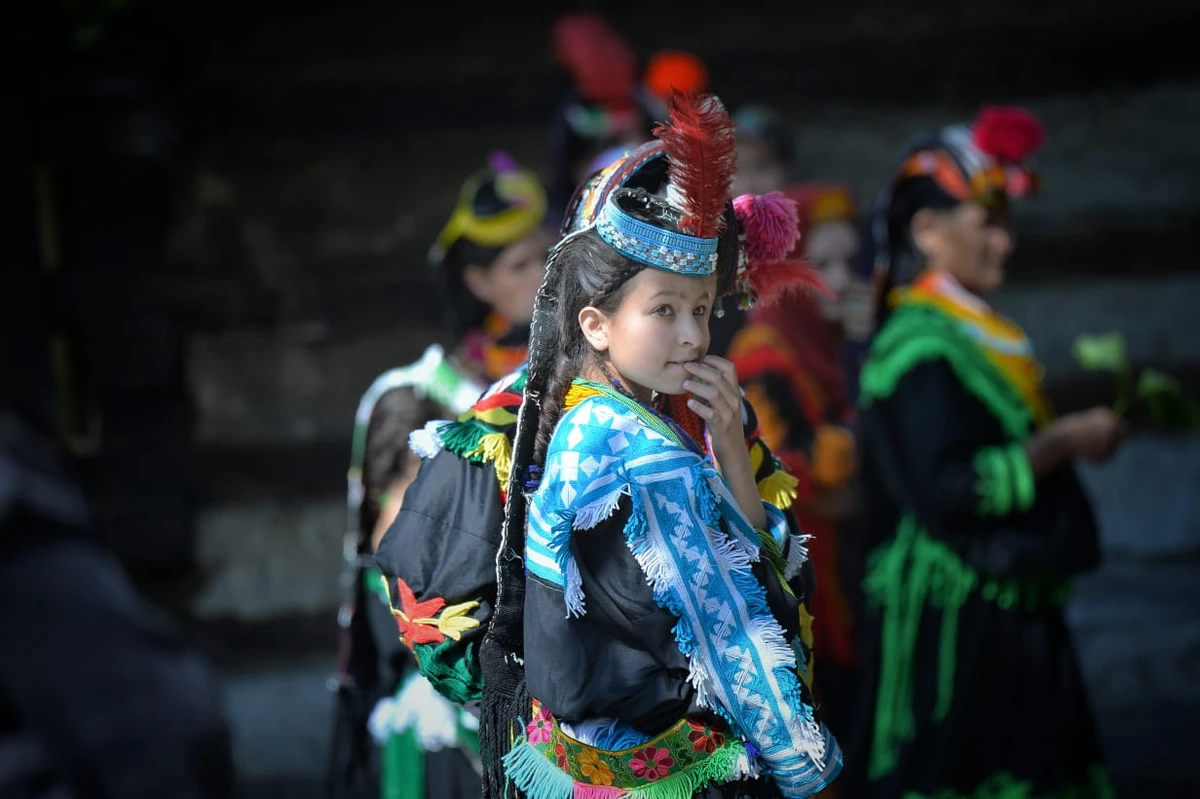
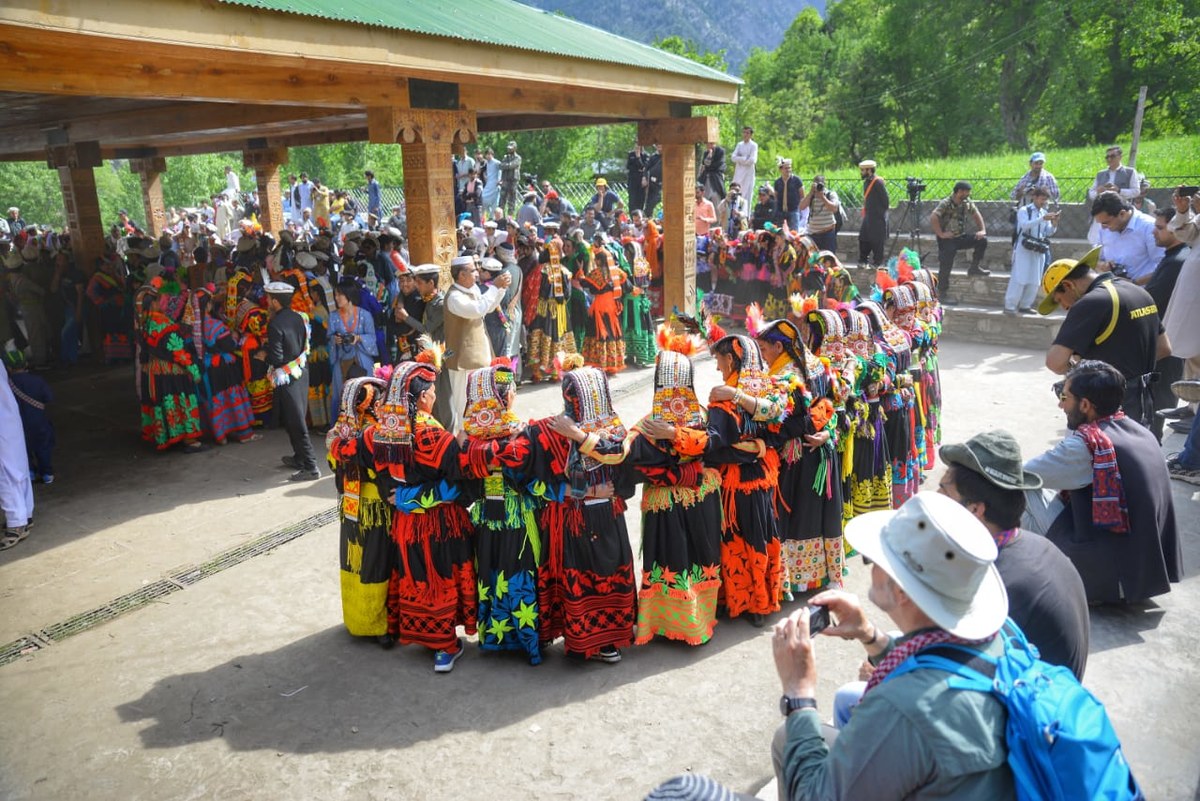
The Chilam Joshi fair, which concluded on Friday, attracted more than 500 foreign tourists to the picturesque Birir, Rambur and Bamburet valleys in Chitral to experience the unique non-Muslim culture of the Kalash people who worship a complex pantheon of gods and whose women eschew veils and men make wine.
“Joshi is a religious spring festival in which girls wear traditional, heavily embroidered black cotton clothes of vibrant colors and colorful glass bead necklaces and dance with boys to the tune of traditional music,” Sayeda Gul, a Kalash woman, told Arab news via phone from Chitral.
Winter usually arrives in the Kalash valleys before the end of September, after which heavy snow blocks access to the area for many months before people can finally begin to move in and out once more around May.

Wazir Zada, a member of the Khyber Pakhtunkhwa provincial assembly who hails from the valleys, told Arab News the Kalash people celebrated the Joshi festival to thank their gods for their bounties.
“It begins on the thirteenth or fourteenth of May in Rambur and moves on to Bamburet before ending in Birir on the fourth day,” Zada said. “The biggest celebrations take place in Bamburet, the largest of the three valleys.”
Another Kalash resident, Abdul Khaliq, said animals and goats were held sacred status in Kalash culture, and the people also used the festival to pray for the safety of their animals and pastures.

“Goat milk is spread on the gods to get their blessings during Joshi,” Khaliq said. “People distribute goat cheese, milk, and other dairy products among each other and guests before taking their animals to pastures in the higher lands.”
Unmarried Kalash boys and girls also use the festival as an opportunity to meet and pick spouses Khaliq said: “Every year, two or three dozen people announce the names of their life partners on the last day of the festival in the presence of the whole community.”
The Kalash, who number just about 3,500 in Pakistan’s population of 208 million, have for centuries practiced polytheism and animal sacrifice without interference from members of Pakistan’s Muslim majority.

But in the last decade or so, the community has been under increasing danger from proselytizing Muslim militants from other parts of Pakistan and just across the border in Afghanistan.
“Conversion to Islam by mostly girls and migration of Kalash people are the two reasons for a recent reduction in the numbers of the Kalash population,” said Syed Harir Shah, a local tour operator. “The government of Pakistan and the UN are making efforts to preserve the culture and minimize this diminishing trend.”
Threats from militants in recent years have also led to a decline in tourism in Chitral, but the security situation has returned to normal in recent years due to military operations in various militant hotbeds in the northwestern regions.
“Foreign tourists were not allowed to move without armed escorts in previous years,” Shah said. “This year, they were allowed free movement and the opportunity to communicate with the locals.”
However, he said unprecedented monsoon floods that drenched the Hindu Kush mountain valleys in 2015 had destroyed infrastructure, which had not been rebuilt.
Talking to Arab News, Junaid Khan, the Director General of the Tourism Corporation Khyber Pakhtunkhwa (TCKP), said his department had helped arrange and manage the traditional Joshi festival, assisting the Kalash community in organizing events and managing waste.
“We also ensured smooth traveling and accommodation in the valleys by mobilizing several government departments,” Khan said, adding that the department had ensured that roads and tunnels leading to the valleys remained open and accessible throughout the festival. TCKP also ensured smooth traffic movement to and from Kalash, provided parking bays for the tourists and set up a small camping tent village for tourists, the director general said.
In the future, Khan said, the provincial government had set aside Rs1 billion for the construction of roads in Chitral, including the road to Ayun valley, the gateway to the Kalash valleys. The federal government has also reserved Rs2 billion rupees for the construction of 44 kilometers of roads in Chitral in the coming fiscal year, he said.