Elon Musk rocket launches Saudi Arabsat satellite

1 / 3
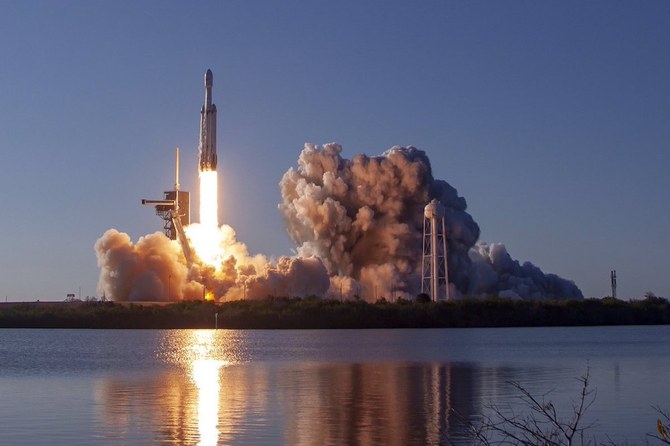
SpaceX attempted to land Falcon Heavy’s side boosters at Landing Zones 1 and 2 and Falcon Heavy’s center core on the Of Course I Still Love You droneship during the Arabsat-6A mission. (Twitter/@SpaceX)
2 / 3
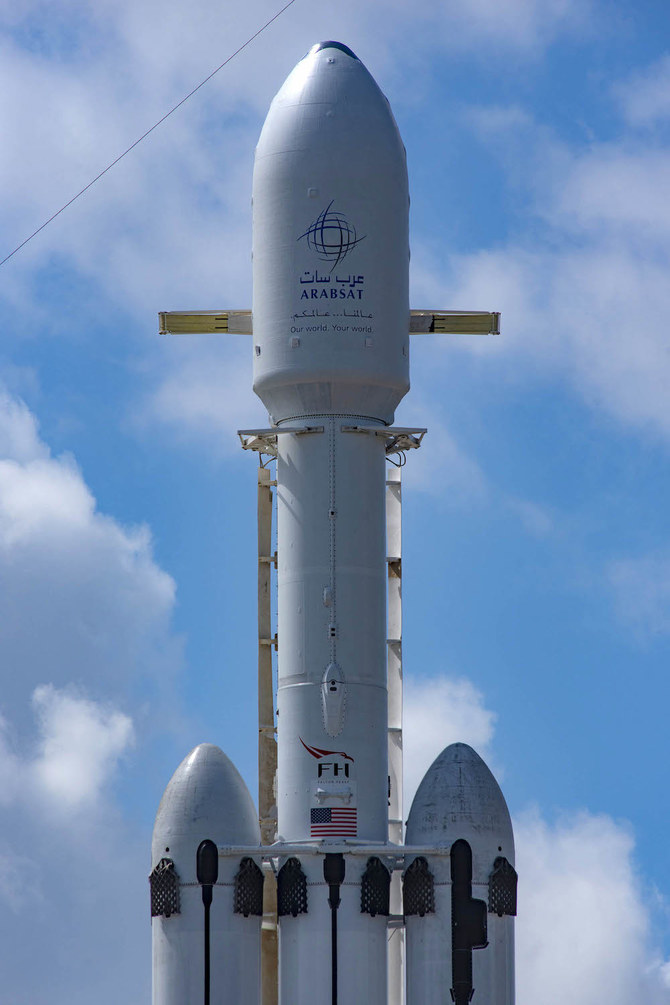
SpaceX attempted to land Falcon Heavy’s side boosters at Landing Zones 1 and 2 and Falcon Heavy’s center core on the Of Course I Still Love You droneship during the Arabsat-6A mission. (Supplied)
3 / 3
SpaceX attempted to land Falcon Heavy’s side boosters at Landing Zones 1 and 2 and Falcon Heavy’s center core on the Of Course I Still Love You droneship during the Arabsat-6A mission. (Supplied)
Updated 12 April 2019
Follow

Elon Musk rocket launches Saudi Arabsat satellite

  • Falcon Heavy launched the Arabsat-6A satellite from Launch Complex 39A (LC-39A) at NASA’s Kennedy Space Center in Florida

LONDON: Elon Musk’s SpaceX has launched its Falcon Heavy rocket carrying a satellite for Saudi Arabia’s Arabsat.
The huge rocket was launched from NASA’s Kennedy Space Station in Florida for Arabsat.
Arabsat CEO Khaled bin Ahmed Balkheyour said it was “a momentous leap in the field of commercial satellites manufacturing and launching.”


Arabsat 6A Satellite is a high-capacity telecommunications satellite that will deliver television, radio, Internet, and mobile communications to customers in the Middle East, Africa, and Europe.
Built by Lockheed Martin, it is the largest and most powerful commercial satellite the US defense giant has ever produced.


Balkheyour praised the work of young Arab engineers in Riyadh and Tunisia who worked on the project.
“Those young engineers who were fully involved in the design of these satellites and the supervision of the manufacturing stages, we owe them all thanks and praise ” he said.



Saudi Aramco, ExxonMobil, Samref ink deal to study Yanbu refinery upgrade

Updated 08 December 2025
Follow

Saudi Aramco, ExxonMobil, Samref ink deal to study Yanbu refinery upgrade

RIYADH: Energy giants Saudi Aramco, ExxonMobil, and Samref have signed a venture framework agreement to upgrade the Yanbu refinery and expand it into an integrated petrochemical complex.

As a part of the deal, the companies will explore capital investments to upgrade and diversify production, including high-quality distillates that result in lower emissions and high-performance chemicals, according to a joint press statement.

The agreement will also see the parties explore opportunities to improve the refinery’s energy efficiency and reduce environmental impacts from operations through an integrated emissions-reduction strategy.

Samref is an equally owned joint venture between Aramco and Mobil Yanbu Refining Co. Inc., a wholly owned subsidiary of Exxon Mobil Corp.

The refinery currently has the capacity to process more than 400,000 barrels of crude oil per day, producing a diverse range of energy products, including propane, automotive diesel oil, marine heavy fuel oil, and sulfur.

“This next phase of Samref marks a step in our long-term strategic collaboration with ExxonMobil. Designed to increase the conversion of crude oil and petroleum liquids into high-value chemicals, this project reinforces our commitment to advancing Downstream value creation and our liquids-to-chemicals strategy,” said Aramco Downstream President, Mohammed Y. Al Qahtani.

He added that the deal will help position Samref as a key driver of the Kingdom’s petrochemical sector’s growth.

The press statement further said that companies will commence a preliminary front-end engineering and design phase for the proposed project, which would aim to maximize operational advantages, enhance Samref’s competitiveness, and help to meet growing demand for high-quality petrochemical products in Saudi Arabia.

The firms added that these plans are subject to market conditions, regulatory approvals, and final investment decisions by Aramco and ExxonMobil.

“We value our partnership with Aramco and our long history in Saudi Arabia. We look forward to evaluating this project, which aligns with our strategy to focus on investments that allow us to grow high-value products that meet society’s evolving energy needs and contribute to a lower-emission future,” said Jack Williams, senior vice president of Exxon Mobil Corp.