- 28,000 cases of leishmaniasis reported in Khyber Pakhtunkhwa in the last six months
- Doctors say shortage of medicines has driven number of cases further up in the last few weeks
TANK, Pakistan: It began with a tiny lesion on Muhammad Hamza’s cheek last month. Soon, most of the 12-year-old boy’s body was covered in sores the size of large coins and speckled with blood. He complained that he had difficulty breathing and eating.
A doctor in Pakistan’s South Waziristan tribal district diagnosed Hamza with leishmaniasis, a disease caused by a parasite injected by the bite of bloodsucking sandflies that can lead to deep ulcers that take months to heal and cause severe scarring, often on the face.
In the last six months, 28,000 cases of the disease have been reported in Pakistan’s northwestern Khyber Pakhtunkhwa province, according to figures from the ministry of health. At least 5,000 of these cases have emerged in the erstwhile semi-autonomous tribal regions that were merged into Khyber Pakhtunkhwa last year after a parliamentary vote.
Previously, the Federally Administered Tribal Areas, as they used to be called, were governed for over 150 years by colonial era tribal laws and provided a haven for militants, gun runners and drug smugglers. Without provincial status, the area also suffered from a lack of national investment in education, telecommunication and, above all, health care.
Doctors from the area said health authorities were ill-prepared to control the outbreak of leishmaniasis and a shortage of medicines had driven the number of cases further up in the last few weeks. Health Secretary Jamil Farooq said the World Health Organization had donated 10,000 glucantime injections, but the shortage persisted. WHO officials could not be reached for comment.
Farooq said the provincial government had adopted a two-pronged policy to tackle the disease: preemptive measures such as fumigation and curative treatment with a course of injections, or by cauterizing sores to kill the parasites.
“The dilemma is that signs of leishmaniasis appear after three months,” Farooq said, adding that the government was also planning to launch an awareness campaign about the spread of the disease and the effective use of insecticides.
The sandflies that spread the parasites are carried by animals as well as people. They often breed on waste land and in rubbish and infest cracks and crevices in people’s homes. From there, they emerge during night hours from late spring to autumn and bite exposed parts of the body like ears, noses, cheeks and hands while people sleep, Dr. Rahim Dawar, the top health official of the South Waziristan tribal district, explained.
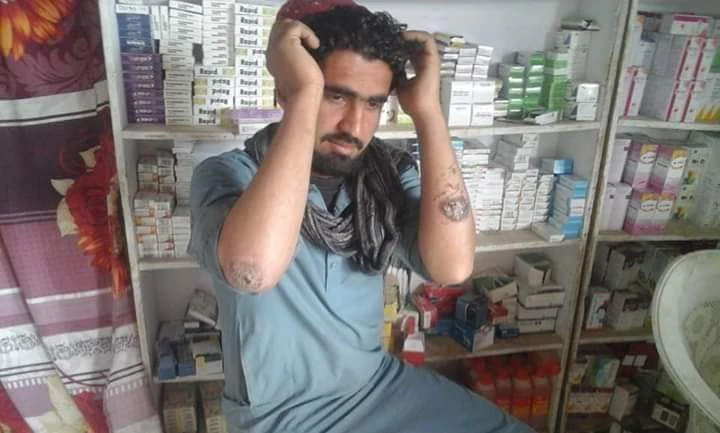
Nasib Shah Shinwari, a tribesman from Khyber tribal district where the largest number of leishmaniasis cased have been reported, said his nine year old daughter contracted the disease six months ago but was now recovering after starting a course of injections.
“Yes, we are getting injections from the District Headquarters Hospital in Landikotal,” he said, referring to the main town in Khyber tribal district. “Sometimes the hospital staff complain of medicine shortage. But she is recovering.”
Hamza’s father Ghulam Rasool said he was unable to find the required leishmaniasis medicines at the District Headquarters Hospital in Tank, the gateway district to the volatile South Waziristan, and had to purchase them at a higher price from a private medical store.
Tribal elder Malik Qabil Khan said locals were planning to convene a jirga, or village assembly, next week to chalk out a strategy on how to tackle the outbreak and build pressure on the administration.