- Plan to construct 5mn housing units requires Rs17tr, State Bank says
- Group is already investing in a housing project in Islamabad
KARACHI: Egyptian billionaire Naguib Sawiris has offered to build 100,000 housing units in Pakistan to help realize Prime Minister Imran Khan’s dream of an ‘ambitious’ housing project, officials said on Friday.
“Naguib Sawiris has expressed his will to invest in 100,000 units of affordable housing to help prime minister (Imran Khan) in his vision toward Pakistan,” Tarek Hamdy, Chief Executive officer of Elite Estates — a partnership between Ora Developer and Saif Holding — told Arab News in an exclusive interview.
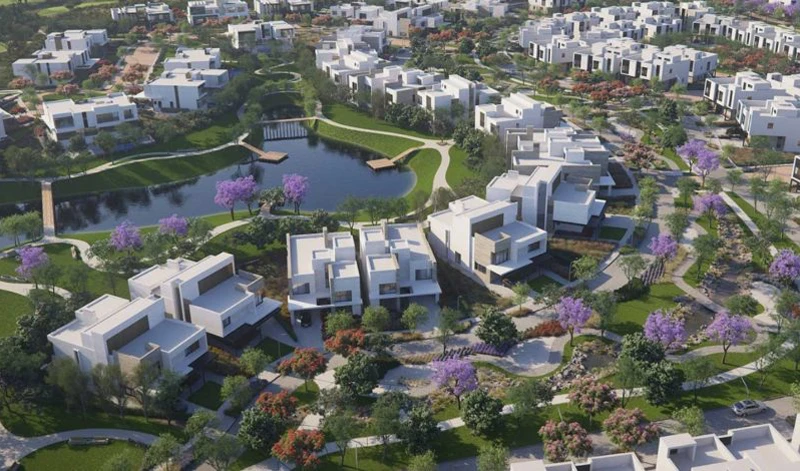
Owned by Sawiris, Ora Developers is already engaged in the construction of a multibillion-dollar housing scheme named ‘Eighteen’ which was launched in 2017 in Islamabad with local partners, Saif Group and Kohistan Builders.
Sawiris’ first investment in Pakistan was in Mobilink, a cellular operator.
PM Khan in October 2018 had launched ‘Naya’ (New) Pakistan Housing Project in line with his party’s election manifesto, which promised fivr million houses for the poor.
Hamdy says they have “set rules or guidelines of the way of doing things” that apply to every real estate projects — whether they are affordable or high value units.
“We will use our experience and knowhow to deliver this properly to the people of Pakistan,” he added.
Since the announcement of the low-cost housing project for the poor, the scheme has been at the heart of all political and economic discourses with several calling it too ambitious.
“This scheme is very ambitious yet very promising for the people of Pakistan. I think all the developers should help in this scheme. You cannot solely rely on the government to build five million houses,” Hamdy said.
Recently, the governor of Pakistan’s central bank had said that the massive housing project would require financing of upto Rs 17 trillion.
Hamdy believes that the promise of building five million affordable housing units cannot be realized in a short span of time. “I think the plan is right but it has to be in stages, has to be in steps. It could be achievable obviously that is not the project (to be achieved) in one or two years... may take few good years, may be couple of decades to be achieved,” he said.
In the Islamabad project the Ora Developers own a 60 percent stake in the project comprising a five-star hotel, 1,068 housing units, 921 residential apartments, business parks, hospitals, schools and other educational facilities and 13 office buildings, and a golf course. The networth of the project is $2 billion.
The next cities on the radar for real estate projects are Lahore, Karachi, and Faisalabad. “We intend to do more, we intend to invest more. I think that our portfolio of real estate could come to $10 billion worth of investments in the next five to 10 years including all the projects that we intent to do,” Hamdy said.
Pakistan’s housing sector is marred by frauds, scams and unfinished schemes which has been discouraging many potential investors from venturing into the sector. However, Hamdy says he is confident of delivering the promise by 2021.
Analysts say that Pakistan’s housing sector offers great opportunities for investment due to increasing demand. “According to estimates, the current real estate market value is around Rs900 billion which is three times that of the GDP,” Saad Hashmey, an analyst at Topline Securities, told Arab News, adding that the PM’s housing project is the need of the hour.
Pakistan faces a shortage of nearly 12 million housing units that may require a massive investment of around $180 billion, according to the former Chairman of the Association of Builders and Developers, Arif Yousuf Jeewa.
Pakistan expects to attract more than $40 billion foreign direct investment in the next five years in oil refining, petrochemical, mining, renewable energy, and real estate sectors. “We estimate that roughly around $40 billion investment will be made by three countries (Saudi Arabia, the UAE, and China) during the next three to five years,” Pakistan Board of Investment BoI chief, Haroon Sharif had told Arab News earlier, adding that “the investment would start materializing within the next two years”.