KARACHI: Pakistan and the Kingdom of Saudi Arabia have finalized the Memorandum of Understand (MoU) for the construction of multi-billion dollar Saudi Aramco oil refinery in Gwadar deep seaport city, located in Balochistan province, officials said on Thursday.
Pakistan is expecting to sign a number of investment deals including the construction of mega oil refinery in the month of February in the presence of a high-level Saudi delegation, confirmed Information Minister Fawad Chaudhry.
“The oil refinery project is the biggest investment project of Saudi Arabia in Pakistan,” he added.
Pakistan and Saudi Arabia have lately expressed renewed interest in enhancing bilateral strategic and trade engagements while the Kingdom also pledged $3 billion in a financial assistant to help Pakistan out of its economic woes.
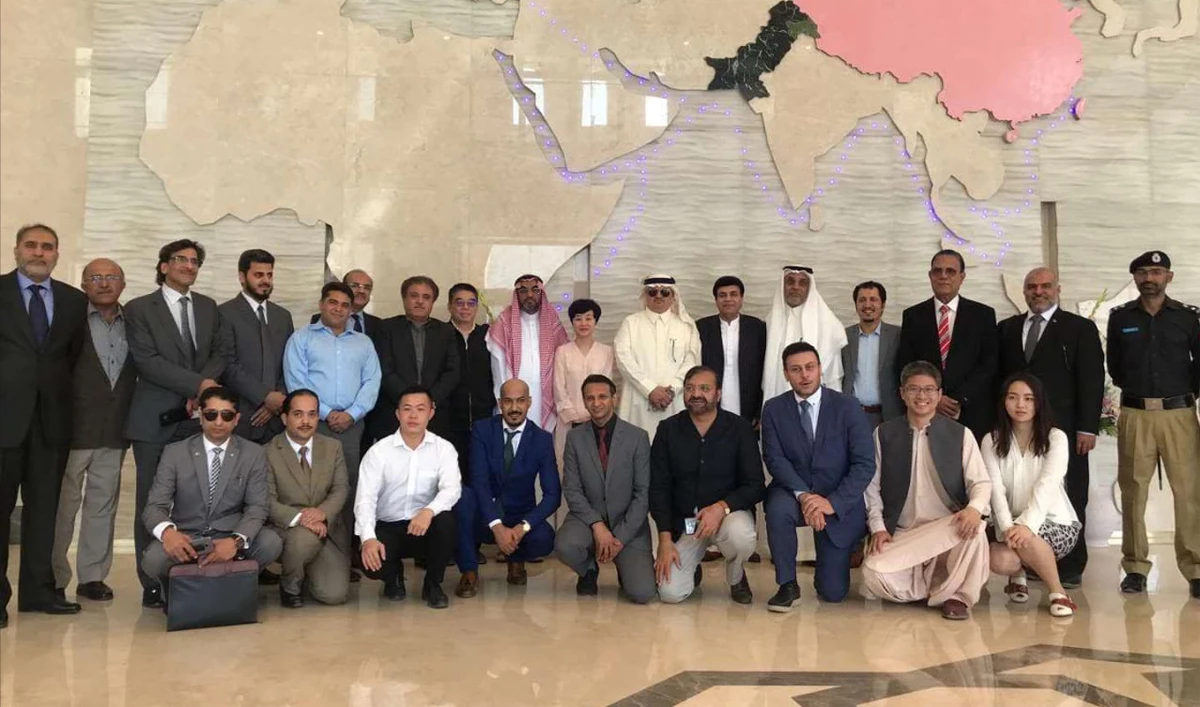
“A 15-member delegation of Saudi Arabia visited Gwadar from Karachi as part of the finalization process of the MoU for Aramco oil refinery,” Haroon Sharif, Minister of State and Chairman of Pakistan Board of Investment (BoI), told Arab News.
“We have finalized the MoU for the construction of Aramco oil refinery,” Sharif said adding that “overall directions have been agreed upon and the agreement will be signed at an ‘appropriate time’.”
Pakistani authorities expect $15 billion investment from Saudi Arabia after Prime minister Imran Khan chose the Kingdom for his maiden visit and consequently made two official visits.
Earlier, the BoI chief had said that “We are going to sign MoUs with Saudi Aramco and Acwa Power within few weeks. Saudi Aramco is going to set up oil refinery and petrochemical complex in Pakistan while Acwa Power will invest in Pakistan renewable energy sector”, Sharif informed.
As part of the investment plan, the Saudi Aramco will construct petrochemical complex housing multi-billion dollar oil refinery.
“I am expecting around $15 billion investment from Saudi Arabia in the next 3 years. The inflow of investment for oil refinery and petrochemical complex in Pakistan is estimated to be between $6 billion to $10 billion,” BoI Chairman told Arab News.
Pakistan hopes to attract more than $40 billion in Foreign Direct Investment (FDI) during the next five years. “We estimate that roughly around $40 billion investment will be made by these three countries (Saudi Arabia, UAE, and China) in the next three to five years,” Sharif had told Arab New during his recent interview.
During the recent visit of the Saudi delegation to Gwadar, the Chairman of Gwadar Port Authority, Dostain Khan Jamaldini, on Wednesday gave a briefing about the current developments including the port, progress on China-Pakistan Economic Corridor (CPEC) and Gwadar Master Plan.
Pakistan, KSA set to ink multi-billion dollar Aramco oil refinery deal
- MoU for construction of mega oil refinery will be inked in February, says information minister
- Pakistan expects $15 billion investment from Saudi Arabia in the next 3 years
Pakistan, UK sign £35 million Green Compact to strengthen climate resilience
- Pakistan ranks among nations most vulnerable to climate change and has seen erratic changes in its weather patterns
- UK will help Pakistan mobilize climate finance, strengthen regulatory frameworks and develop bankable climate projects
ISLAMABAD: Pakistan and the United Kingdom (UK) have formalized a comprehensive climate partnership with the launch of a Green Compact that aims to enhance climate resilience, accelerate clean energy transition and scale up nature-based solutions, including mangrove conservation, Pakistani state media reported on Sunday.
The agreement, signed in Islamabad by Federal Minister for Climate Change and Environmental Coordination Dr. Musadik Malik and UK Minister for International Development Jennifer Chapman, unlocks £35 million in targeted support for green development and long-term climate action, according to Radio Pakistan broadcaster.
Pakistan ranks among nations most vulnerable to climate change and has seen erratic changes in its weather patterns that have led to frequent heatwaves, untimely rains, storms, cyclones, floods and droughts in recent years. In 2022, monsoon floods killed over 1,700 people, displaced another 33 million and caused over $30 billion losses, while another 1,037 people were killed in floods this year.
Mohammad Saleem Shaikh, a spokesperson for Pakistan’s Ministry of Climate Change, described the compact as a “decisive move toward action-oriented climate cooperation,” noting that its implementation over the next decade will be critical for Pakistan which regularly faces floods, heatwaves and water stress.
“The Compact is structured around five core pillars: climate finance and investment, clean energy transition, nature-based solutions, innovation and youth empowerment, and adaptation and resilience,” the report read.
“Under the agreement, the UK will work with Pakistan to mobilize public and private climate finance, strengthen regulatory frameworks for green investment, and develop bankable climate projects.”
Clean energy forms a central component of Pakistan’s transition, with Islamabad planning to expand solar and wind generation to reduce fossil fuel dependence, improve energy security and stabilize power costs, according to Shaikh.
“Renewable energy is now economically competitive, making the transition both environmentally and financially viable,” he was quoted as saying.
“Nature-based solutions, particularly large-scale mangrove restoration, will protect coastal communities from storm surges and erosion while enhancing biodiversity and carbon sequestration.”
Under the Compact, technical support, mentoring and access to investors will be provided to climate-smart startups and young innovators, reflecting Pakistan’s recognition of youth-led initiatives as central to future climate solutions.
On the occasion, Chapman, on her first official visit to Pakistan, underscored the urgency of climate action, highlighting the UK’s support for renewable energy, mangrove and ecosystem restoration, early-warning systems, climate budgeting and international investment flows into Pakistan.
Shaikh described the Green Compact as “a strategic turning point” in Pakistan–UK relations on climate change, saying its effective implementation is essential for Pakistan to meet its national climate targets.