We need more support, says famous Pakistani artist

1 / 4
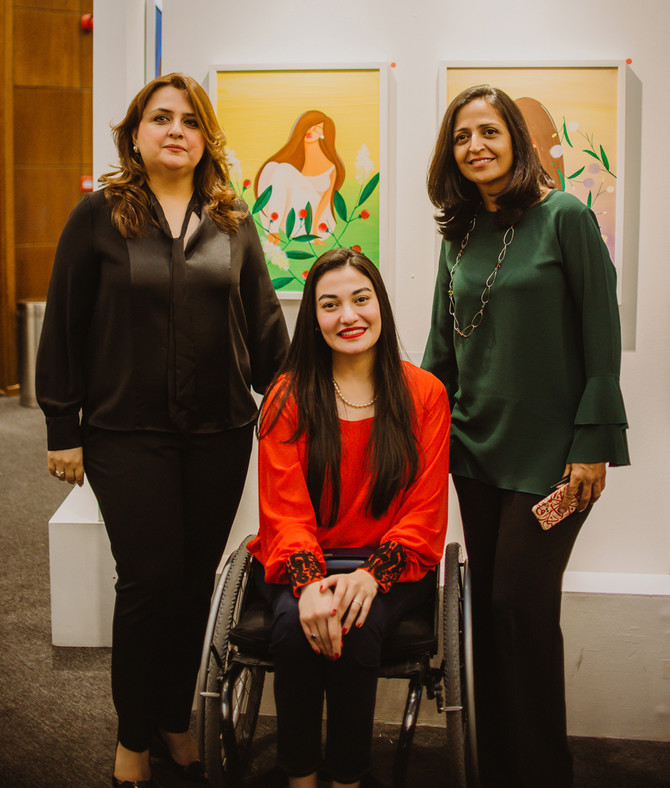
Muniba Mazari is in Dubai for her first international exhibition. (Photos by Muniba Mazari)
2 / 4
Muniba Mazari is in Dubai for her first international exhibition. (Photos by Muniba Mazari)
3 / 4
Muniba Mazari is in Dubai for her first international exhibition. (Photos by Muniba Mazari)
4 / 4
Muniba Mazari is in Dubai for her first international exhibition. (Photos by Muiba Mazari)
Updated 25 September 2018
Follow

We need more support, says famous Pakistani artist

  • Art should be accessible to the masses
  • The state has a responsibility to take care of its artists

DUBAI: Muniba Mazari is a famous Pakistani artist, model, activist, and motivational speaker. She uses a wheelchair because of injuries sustained in a car accident at the age of 21. She is also the National Ambassador for UN Women Pakistan.
She is in Dubai for her first international exhibition. Titled as “And I chose to live,” the exhibition was organized in Pakistan Association Dubai and hundreds of Pakistani community members attended and appreciated her work.
While speaking on the sideline of the exhibition, Mazari told Arab News that Pakistan is a very creative nation but a little more encouragement and a lot more exposure is all we need.
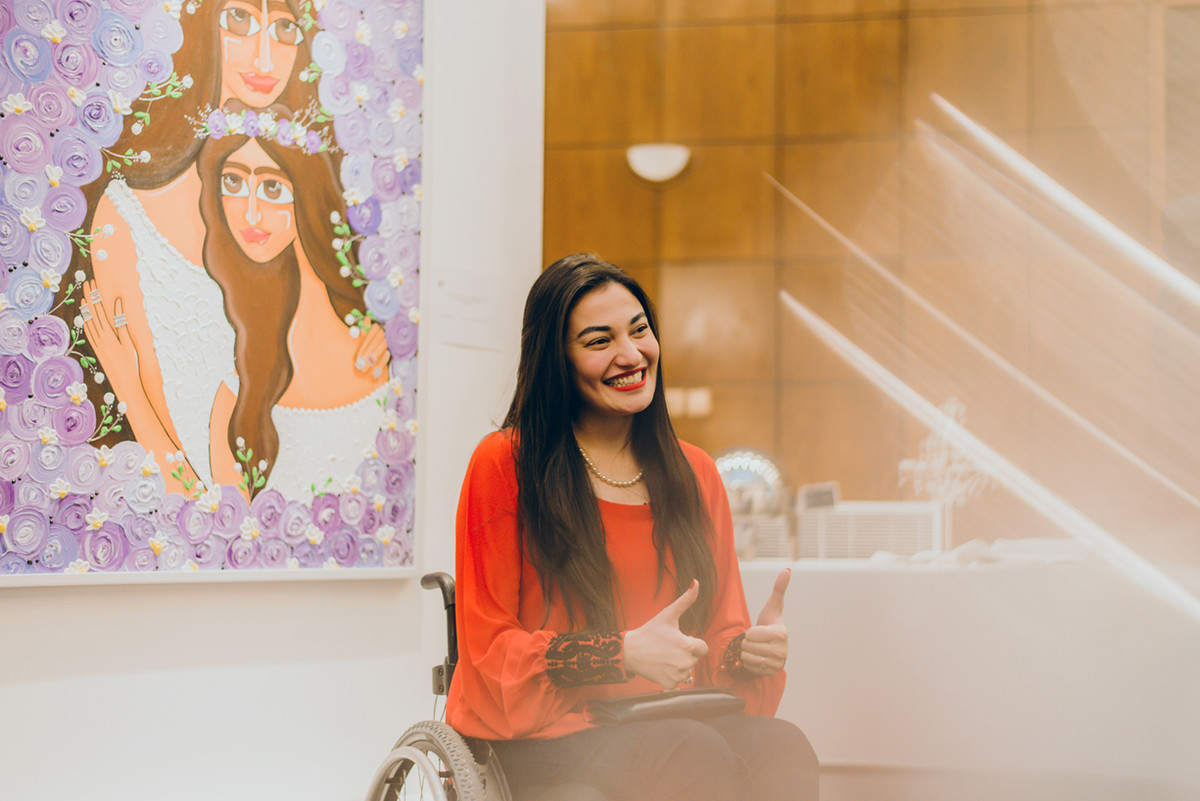


Mazari said creative expression needs a lot of courage. “Pakistani artists are very courageous because they choose challenging topics and depict social change in their artwork. (However) there are people on our society who don’t appreciate such art, but then there are those who understand and support those artists and their vision.” (Photo courtesy: Muniba Mazari)

She denied the notion that Pakistan has few women artists. On the contrary, she said: “There are a lot of women artists in Pakistan but unfortunately they don’t get a chance to exhibit their work at bigger level. That’s why you don’t see them in the mainstream. We need to encourage and promote their work or they’ll always be left behind.”
When asked about her most favorite artist, she said: “In Pakistan my most favorite artist is Saeed Akhtar and globally I love the works of Thomas Fedro and Frida Kahlo.”

Mazari said the state should take care of its artists. “It’s heartbreaking to see artists struggling for their basic rights. You cannot make a living as an artist and that’s one of the major reasons why people don’t want to pursue art as their main career. It comes with a lot of financial challenges. It is the responsibility of the state as well as our society to support the artists, especially the ones who are in need.”
She said Lahore was the most artistic city, rich with cultural diversity. Karachi comes second, whereas the rest of the cities were slowly evolving. “I wish we have more art galleries in all the cities of Pakistan where people can go and experience art.”
Mazari believes that art can fight extremism. “Art is the most powerful way of highlighting social issues and fighting taboos. But for that we need to make art more accessible to the masses.”

Pakistan drops 8,000 MW power procurement, claims $17 billion savings amid IMF-driven reforms

Updated 18 January 2026
Follow

Pakistan drops 8,000 MW power procurement, claims $17 billion savings amid IMF-driven reforms

  • Government says decision taken “on merit” as it seeks to cut losses, circular debt, ease consumer pressure 
  • Power minister says losses fell from $2.1 billion to $1.4 billion, circular debt dropped by $2.8 billion

ISLAMABAD: Pakistan has abandoned plans to procure around 8,000 megawatts of expensive electricity, the power minister said on Sunday, adding that the decision was taken “purely on merit” and would save about $17 billion.

The power sector has long been a major source of Pakistan’s fiscal stress, driven by surplus generation capacity, costly contracts and mounting circular debt. Reforming electricity pricing, reducing losses and limiting new liabilities are central conditions under an ongoing $7 billion IMF program approved in 2024.

Pakistan has historically contracted more power generation than it consumes, forcing the government to make large capacity payments even for unused electricity. These obligations have contributed to rising tariffs, budgetary pressure and repeated IMF bailouts over the past two decades.

“The government has abandoned the procurement of around 8000 megawatts of expensive electricity purely on merit, which will likely to save 17 billion dollars,” Power Minister Sardar Awais Ahmed Khan Leghari said while addressing a news conference in Islamabad, according to state broadcaster Radio Pakistan.

He said the federal government was also absorbing losses incurred by power distribution companies rather than passing them on to consumers.

The minister said the government’s reform drive was already showing results, with losses reduced from Rs586 billion ($2.1 billion) to Rs393 billion ($1.4 billion), while circular debt declined by Rs780 billion ($2.8 billion) last year. Recoveries, he added, had improved by Rs183 billion ($660 million).

Leghari said electricity tariffs had been reduced by 20 percent at the national level over the past two years and expressed confidence that prices would be aligned with international levels within the next 18 months.

Power sector reform has been one of the most politically sensitive elements of Pakistan’s IMF-backed adjustment program, with higher tariffs and tighter enforcement weighing on households and industry. The government says cutting losses, improving recoveries and avoiding costly new capacity are essential to stabilizing public finances and restoring investor confidence.