JERUSALEM: Israeli Prime Minister Benjamin Netanyahu said on Sunday that he discussed Syria and Iran with US President Donald Trump ahead of the latter’s meeting with Russian President Vladimir Putin.
In remarks to the Israeli cabinet, Netanyahu said he spoke by phone on Saturday with Trump and that the US president reiterated his commitment to Israel. In Helsinki on Monday, Trump will meet Putin, Damascus’ big-power backer and a regular interlocutor with Tehran.


![]()
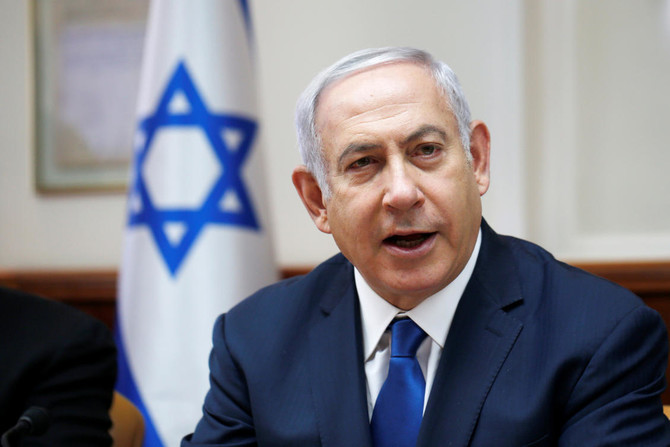

Israel’s Netanyahu discussed Syria, Iran with Trump
Israel’s Netanyahu discussed Syria, Iran with Trump

Sudan paramilitary drone strike on school kills two children: medical source
- Since it began, the war has killed tens of thousands and left around 11 million people displaced
KHARTOUM: A drone strike blamed on Sudan’s paramilitary Rapid Support Forces killed two children and injured 12 others Wednesday in the southern city of El-Rahad, a medical source told AFP.
El-Rahad lies in Sudan’s Kordofan region, currently the fiercest battlefield in the war raging between the RSF and the regular army since April 2023.
“I saw a dozen students injured,” Ahmed Moussa, an eyewitness to the attack, told AFP, adding that the drone had struck a traditional Qur'anic school.
El-Rahad, in North Kordofan state, was retaken by the army last February, as part of a rapid offensive that saw it push west to break a long-running siege on state capital El-Obeid.
The RSF has been trying to re-encircle El-Obeid since, including by launching successive drone strikes on the main highway out of the city, which connects the western region of Darfur with the capital Khartoum.
Since it began, the war has killed tens of thousands and left around 11 million people displaced, creating the world’s largest hunger and displacement crises.
It has also effectively split the country in two, with the army holding the north, center and east while the RSF and its allies control the west and parts of the south.


Latest updates


Recommended


© 2026 SAUDI RESEARCH & PUBLISHING COMPANY, All Rights Reserved And subject to Terms of Use Agreement.