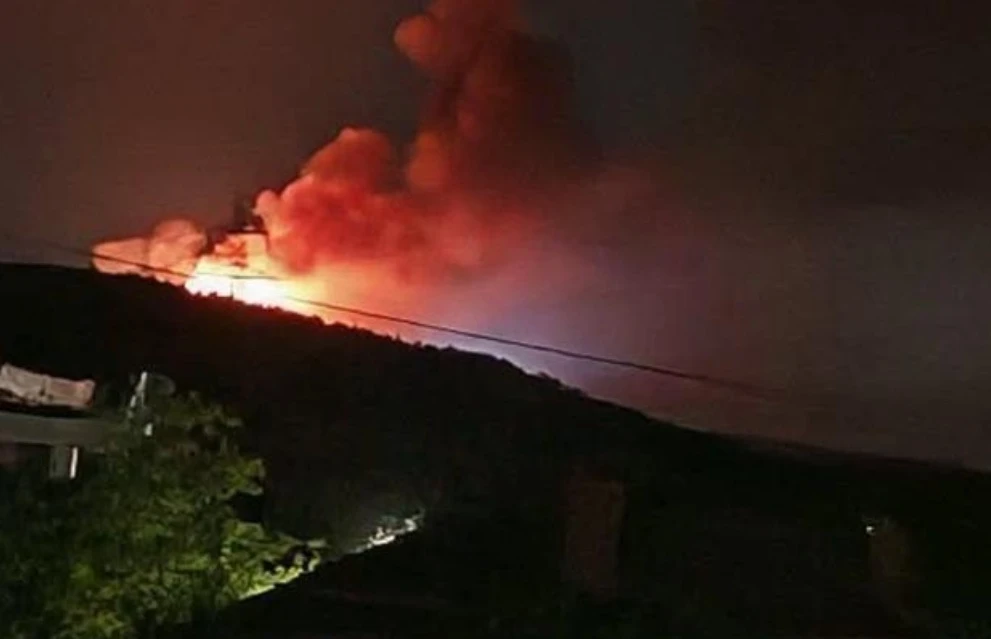
- Intelligence agencies say that Al-Qaeda has planned sabotage activities in Karachi and Punjab. The chief of Jandullah, an affiliate of Al-Qaeda in the Indian Subcontinent (AQIS), is already present in Karachi to execute the plan
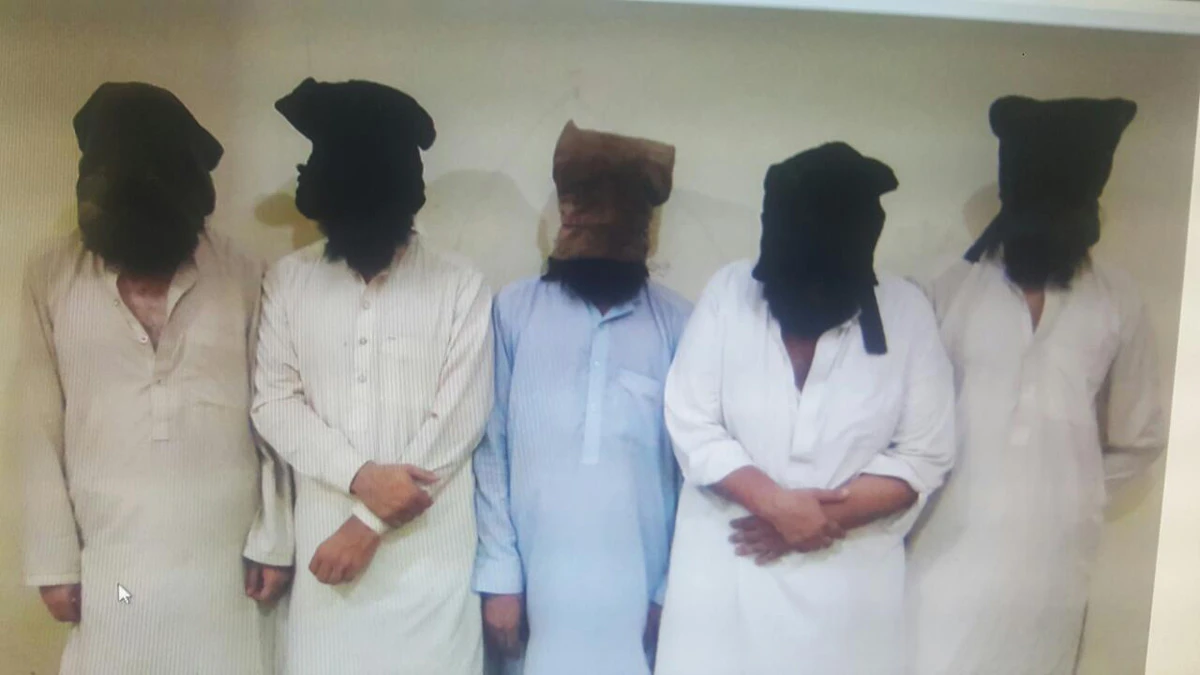
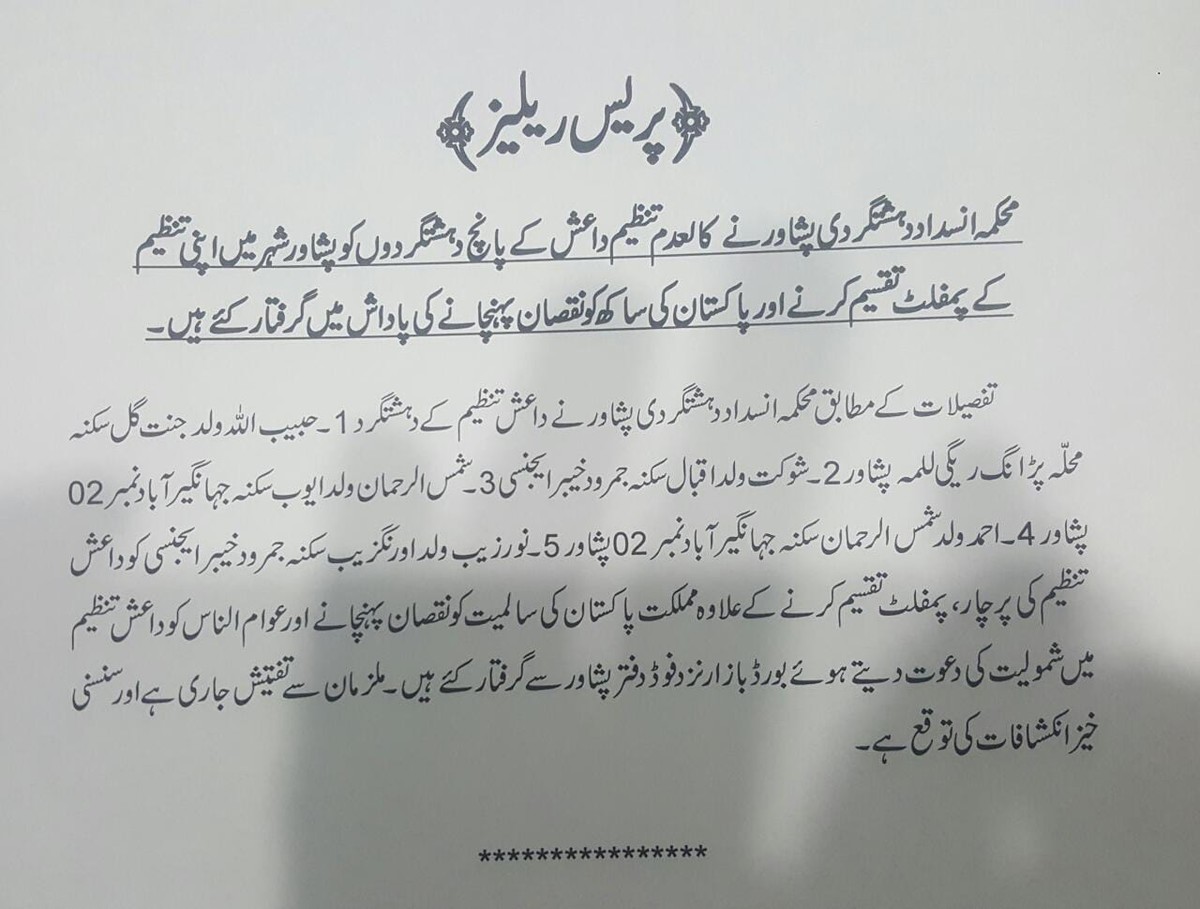
- CTD Peshawar on Friday claimed to have arrested five Daesh terrorists, who, according to police, were recruiting people in the Khyber Pakhtunkhwa capital
KARACHI: Major political parties in Pakistan, which intelligence reports say are the direct target of militants, have urged the government to tighten security for their candidates after the Taliban carried out two bomb attacks on election activities in northern Khyber Pakhtunkhwa province.
On Tuesday a bomb attack on the election meeting of Awami National Party — a Pashtun nationalist and liberal party — left its leader and candidate, Haroon Bilour, and 20 others dead. Just three days later on Friday, the rally of Akram Khan Durrani, former chief minister and leader of the religo-political party, Jamiat-Ulema-e-Islam Fazal (JUIF), killed four. Durrani survived.
Intelligence agencies alarms
Pakistan’s intelligence agencies have sent a series of threat alerts to law enforcement, warning them of attacks on political leadership, including PTI’s Imran Khan, PMLN’s Shehbaz Sharif and JUIF’s Akram Durrani.
“Sleeper cells of Daesh/TTP/AQIS/LeJ have also been reactivated and are likely to target security installations as well as political figures to disrupt the momentum of GE-2018,” reads an intelligence report, a copy of which was made available to Arab News.
The intelligence agencies say that they have learnt that Al-Qaeda in Indian Subcontinent (AQIS) — a branch of Al Qaeda — is planning major terrorist activities in Karachi and Punjab during the general elections of 2018. The report has named three terrorists tasked with carrying out activities including suicide attacks. “Ameer of Jandullah Tariq Burmi is reportedly present in Karachi and will coordinate and execute terrorist activity (ies) in Karachi.”
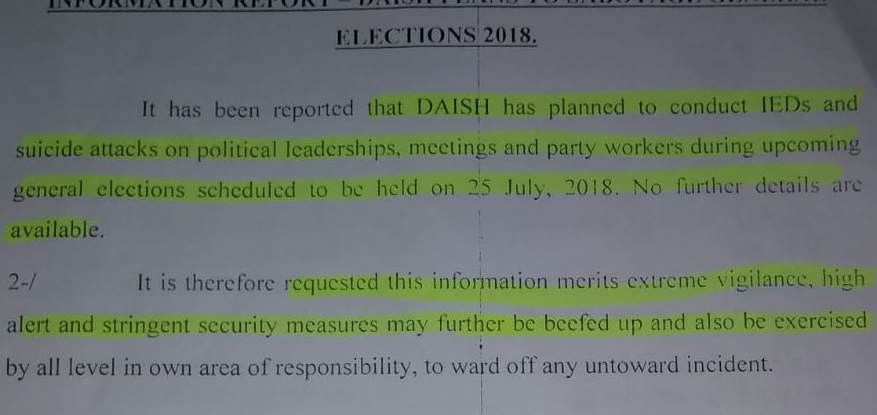
Another threat alert reads: “Daesh has planned to conduct IEDs (improvised explosive devices) and suicide attacks on political leaderships, meetings and party workers during upcoming general elections scheduled to be held on July 25, 2018.”
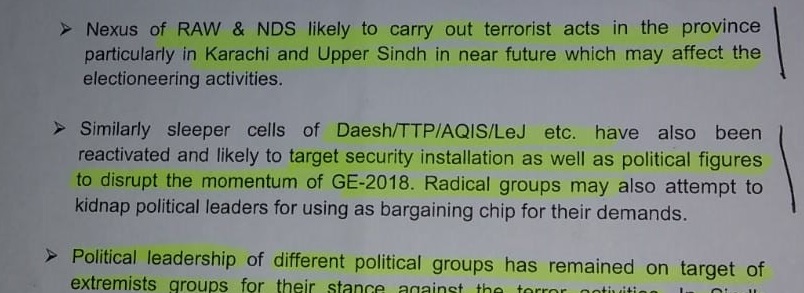
A threat alert says that the proscribed Jamaat-ut-Ahrar (JuA) has also planned to target the leadership of different political parties by carrying out blasts with explosive-laden vehicles. “A potential life threat against Mr. Shehbaz Sharif, former Chief Minister of Punjab, has been reported on the pretext of various attacks on PMLN leaders in the recent past,” reads another threat alert.
According to reports, the Afghanistan-based militants groups, i.e. TTP and its affiliates, in connivance with other outfits, may target prominent political figures in public gatherings to sabotage the general elections 2018 process in Pakistan. “Such terrorist activities may include SB/IED/VBIED/sniper attacks against the main leadership of the major political parties as well as other entities which could contribute toward affecting the law and order situation.”
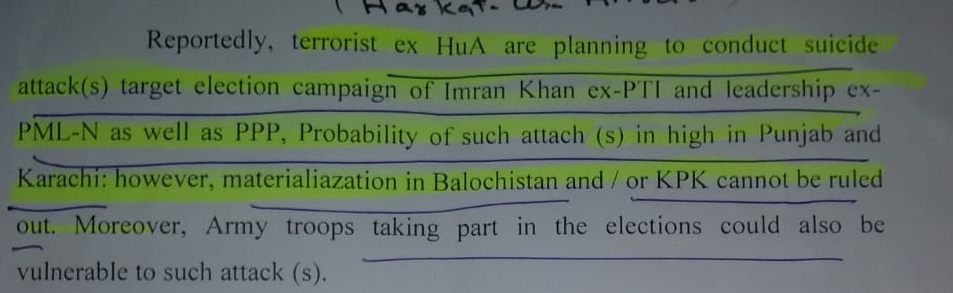
“Terrorists of Harkat-ul Ahrar are planning to conduct suicide attacks targeting the election campaign of Imran of PTI and leadership of PMLN as well as PPP, probability of such attack is high in Punjab and Karachi, however, materialization in Balochistan and KP cannot be ruled out,” reads another alert.
Another intelligence report, which also warned against infighting between political parties during the campaign and on polling day, especially in Sindh and its capital Karachi, reads: “The terrorists may conduct suicide, IED blasts, attacks on politicians and public gatherings, target killing, kidnapping of political and religious figures, attacks over security personnel installations.”
Raja Umar Khattab, a senior terrorism police officer known for his actions against Al-Qaeda and Daesh militants, says generally the situation is under control as peace has been restored in Pakistan.
“The terrorism threat, however, persists in Karachi as there had been no act of terrorism for long and sleeper cells have remained quiet in a bid to look for the soft targets,” Khattab said, adding major gatherings such as election activities may provide that soft target.
Militant of Daesh arrested
Besides recent attacks, the Friday arrests of Daesh in Peshawar, a Pakistani city close to Afghan border, also corroborate the intelligence reports.
The Counter Terrorist Department has arrested five terrorists associated with Daesh from Board Bazaar neighborhood, a handout issued by CTD Peshawar on Friday said, adding that investigations are underway and startling disclosures are expected.
“The terrorists, besides distributing pamphlets of Daesh, were inviting people to the outfit for the cause of damaging integrity of Pakistan.”
Vulnerable demands tightened security
The situation has alarmed political parties, which have demanded proper security arrangements.
“We have expressed our reservations to the Election Commission of Pakistan (ECP). In our Thursday meeting with ECP, the security of the candidates and people remained top of the agenda,” Moula Bux Chandio, the Pakistan People’s Party central information secretary, told Arab News.
“PPP had always been top of the target list of terrorists. Our leader Benazir Bhutto was martyred during an election campaign,” Chandio said, saying threats to specific parties is a threat to free and fair elections so it is the responsibility of the caretakers to provide complete security.
The Muttahida Qaumi Movement, Pakistan (MQM-P), a liberal nationalist party which had bagged the majority of seats from Urban Sindh, was also under Taliban attacks during 2013 general elections.
“The security agencies have brought much peace but the bomb blasts in Peshawar and Bannu have raised the alarm bell,” said Aminul Haque, the MQM’s spokesperson, lamenting that the government took back the security of its leaders, leaving them at the mercy of terrorists. “Not only security of our central leadership but the security of our headquarters at Bahadurabad has also been taken,” he told Arab News.
Haque said: “Had the people responsible for ensuring security worked for it instead of meddling in political affairs, the situation would have been much better.”
Ameer Nawab, the Awami National Party’s Sindh leader and former minister, said that the security of parties previously under attack should have been beefed up. “Instead, we are denied security that means less movement and less campaigning, which results in poor results,” he said.