
Punjab Information Technology Board dismisses report of data leak

(Shutterstock)
Updated 09 May 2018
Follow

Punjab Information Technology Board dismisses report of data leak

ISLAMABAD: Pakistan’s Punjab Information Technology Board (PITB) on Wednesday dismissed reports of a massive data breech of citizens’ personal information.
“There is no data breach of government of Punjab IT systems,” Burhan Rasool, PITB General Manager (IT) told Arab News.
“Those spreading baseless propaganda are doing a national disservice,” he added.
An investigation published by Technology news website TechJuice was followed up by local news organisations. It was claimed that leaked information included Computerized National Identity Card information, National Database & Registration Authority family tree data and databases of registered mobile users.”
“Some elements want to derail the technological development in Punjab through the propaganda campaign, but they won’t succeed,” Rasool said.
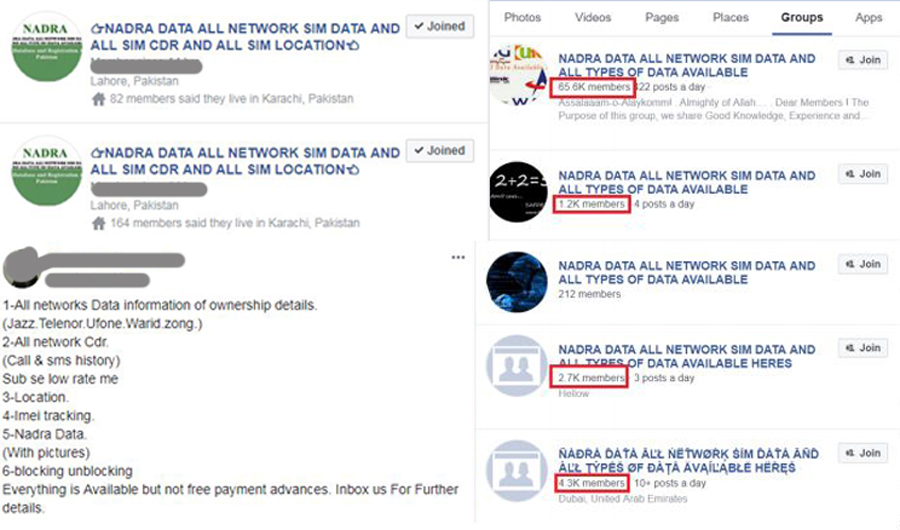


Citizens data allegedly stolen from NADRA as shown in the report by TechJuice. (Photo courtesy: TechJuice)


“Elements behind this malicious campaign will be traced and brought to justice.”
He attempted to reassure the public by adding that a system is in place to ensure security and privacy of the citizens’ data.
However, the TechJuice report said that data had been extracted and was being sold on Facebook and WhatsApp.
The PITB has access to the country’s National Database and Registration Authority’s (NADRA) server for digitizing the data of citizens by linking their Computerized National Identity Card (CNIC) numbers to numerous public departments.
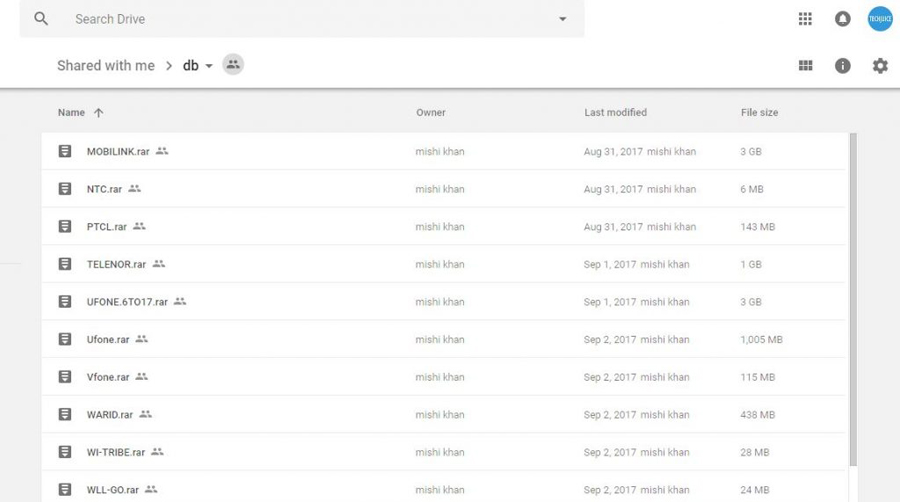



Citizens data allegedly stolen from telecom companies displayed in the investigative report by TechJuice. (Photo courtesy: TechJuice)


Saudi Arabia leads Pakistan’s December remittances as inflows rise 16.5%

Updated 8 sec ago
Follow

Saudi Arabia leads Pakistan’s December remittances as inflows rise 16.5%

  • Remittances reach $3.6bn in December, central bank says
  • Flows from Gulf countries remain backbone of Pakistan’s external financing

KARACHI: Workers’ remittances to Pakistan rose sharply in December with inflows led by Saudi Arabia, according to State Bank of Pakistan data released on Friday, providing critical support to the country’s foreign exchange reserves and balance of payments. 

Remittances, a key source of hard currency for Pakistan, have remained resilient despite global economic uncertainty, helping cushion the country’s current account, support the rupee and stabilize foreign exchange reserves at a time when Islamabad remains under an International Monetary Fund (IMF) bailout program.

According to the State Bank of Pakistan’s official data, workers’ remittances reached a record $38.3 billion in fiscal year 2024-25 (July 2024–June 2025), up from about $30.3 billion the year before, reflecting strong labor migration to Gulf countries and improved formal banking channels. Economists say remittances are especially vital for Pakistan because they finance imports, support household consumption and reduce reliance on external borrowing.

“Workers’ remittances recorded an inflow of $ 3.6 billion during December 2025,” the central bank said in a statement.

“In terms of growth, remittances increased by 16.5 and 12.6% on y/y and m/m basis respectively.”

On a cumulative basis, remittances also posted solid growth in the current fiscal year.

“Cumulatively, with an inflow of $ 19.7 billion, workers’ remittances increased by 10.6% during H1FY26 compared to $ 17.8 billion received during the same period last year,” the statement said.

Saudi Arabia remained the single largest source of inflows in December with $813.1 million, followed by the United Arab Emirates at $726.1 million, the United Kingdom at $559.7 million and the United States at $301.7 million, according to the central bank.

Millions of Pakistanis work abroad, particularly in Saudi Arabia and the United Arab Emirates, sending money home to support families and local economies. The government and central bank have encouraged the use of formal channels in recent years, helping improve transparency and sustain inflows.