LONDON: Saudi Arabia’s participation in the Venice Biennale, in both its art and architecture sections, has long been a dream of many people working in creative fields.
The dream will begin to come true this year, when the Kingdom officially hosts a pavilion at the The Biennale Architettura’s 16th International Architecture Exhibition, alongside countries from around the world. It is being organized by MiSK Foundation, through a project that highlights the experiences and expertise of young Saudi men and women. In addition to shouldering the huge responsibility of presenting the country’s first exhibition at the global event, the participants will share a vision for the future of urban development in the country.
The Saudi national pavilion will interpret the overall theme of this year’s event, Freespace, through a project called Separated Spaces. It is being coordinated by architectural researcher Jawaher Al-Sudairy, and the dean of Faculty of Design at Imam Abdulrahman bin Faisal University, Dr. Sumayah Al-Solaiman. Brothers Turki and Abdulrahman Gazzaz, the founders of architectural-design consultants Brick Lab, will examine in an exhibition the social effects of architecture.
The main idea behind the Saudi pavilion is that empty spaces create many opportunities, since they attract passers-by, visitors and tenants, and provide them with many options. The investment in and rapid development of free spaces has led to the growth of residential suburbs surrounding cities. This makes it increasingly difficult to differentiate between the border of a city and the surrounding areas.
Al-Sudairy, the exhibition’s coordinator, told Asharq Al-Awsat, a sister publication of Arab News, that the Biennale theme of Freespace has many layers.
“Our interpretation and vision of the theme is all about exploring the idea of urban expansion we are witnessing in our cities, as a result of the population growth in Saudi cities causing the fragmentation of some parts of society,” she said. “The pavilion will explore the separated spaces and address the idea of containment”.
The official announcement of the pavilion emphasizes this and points out that urban centers in Saudi Arabia have experienced rapid modernization during the past four decades, while rural migration has led to the development of pockets of suburban residential areas. This has created disconnected neighborhoods in which residents rely on cars for transportation. As a result of this fragmentation, more than 40 percent of land in the expanding city remains vacant. These empty spaces separating isolated residential areas undermine social ties and exhaust natural resources, leading to the creation of so-called social bubbles.
The Gazzaz brothers will present in the pavilion a vision that explores the social effects of this urban architecture. They aim to have visitors explore changing Saudi cities and urban architecture, in addition to the effects of this urban expansion. The exhibition will feature interconnected units in the form of cylinders of different sizes, representing the idea of the space between these separated spaces, and themes such as empty lands, urban expansion, isolation and social integration. The cylinders will be made from resin to shed light on oil being the element that has encouraged and fueled the rapid urban expansion and modernization in the Kingdom.
“We will be using sand from different regions along with resin, which is semi-plastic,” said the brothers. “These materials cut short the spaces between cities in the Kingdom and reflect the economic state of the country.”
The exhibition will also highlight the relationship between space and architecture, and explore the possibility of creating greater interaction by rethinking designs and adopting different styles. Displayed structures will range from roads and public places to flexible spaces that unleash their inherent potential.
“This project is very exciting for us and we were very happy when we won the competition that determined which project will be representing Saudi Arabia in the Biennale,” the Gazzaz brothers told Asharq Al-Awsat. “We are also very happy for the opportunity to work with the coordinators, Jawaher Al-Sudairy and Sumayah Al-Solaiman, and the rest of the team. It is a very important project shedding light on Saudi Arabia in its current state, and we love that we are part of it.”
They added that an important aspect of the project for them is “the interaction with the audience and conveying a picture of the state of urban spaces in three Saudi cities: Jeddah, Riyadh and Dammam. We try to present the concept through infographics, along with using spatial spaces through which visitors will pass.”
The description of the exhibition begs the question of whether it will compare the past and present of the cities.
“The work relies on the narrative of how these cities were and how they are nowadays,” said the brothers. “The project is vast and includes many different layers of information in addition to the experience. History is one of the elements, along with the effect social media has had on communities in Saudi Arabia.”
Al-Solaiman added: “The Kingdom’s first participation [in the Biennale], under the title Separated Spaces, focuses on the social aspect of architecture and urbanization since they have an important effect on people’s lives, through helping or setting obstacles in the face of the best social relations, to provide people with a better well-being”.
She also said that the interconnected exhibition could be considered “a gesture to educate society and unite it in re-imagining our cities, providing a space for dialogue to make the quality of life better in Saudi cities through architecture and urbanization.”
The Biennale Architettura 2018: 16th International Architecture Exhibition will take place in Venice from May 26 to November 25 2018.


![]()
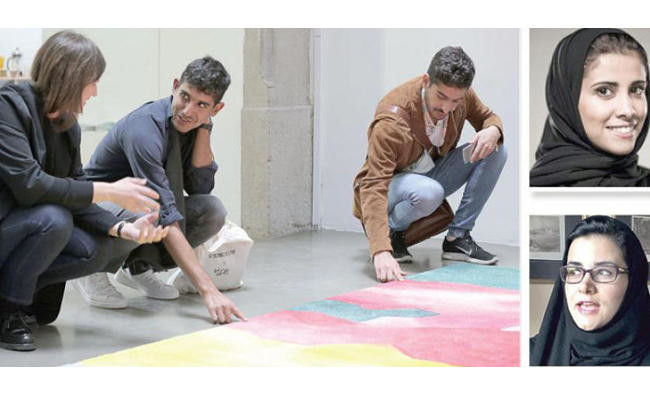
Saudi Arabia’s first-ever exhibition at the Venice Biennale will offer space to think about the future
Saudi Arabia’s first-ever exhibition at the Venice Biennale will offer space to think about the future

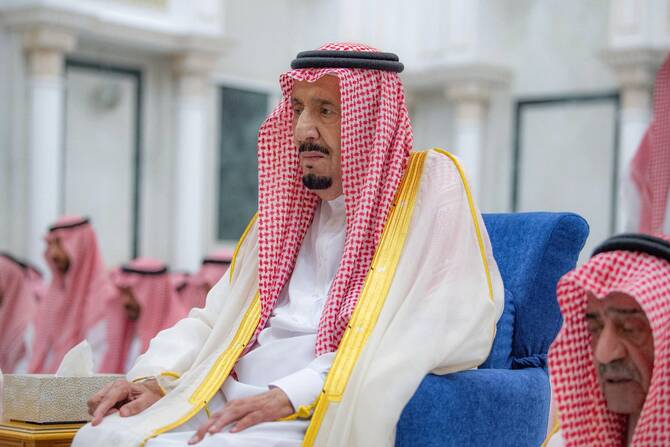
Saudi Arabia’s King Salman leaves hospital after medical checkup in Riyadh
RIYADH: Saudi Arabia’s King Salman left the King Faisal Specialist Hospital in Riyadh on Friday night, the Saudi Press Agency reported.
The king had been undergoing medical examinations at the hospital, SPA reported earlier.
The report added that the results of the examinations were “reassuring.”


Latest updates


© 2026 SAUDI RESEARCH & PUBLISHING COMPANY, All Rights Reserved And subject to Terms of Use Agreement.