PESHAWAR: A uniquely large Buddha statue that has been in Peshawar Museum for more than a century will soon be displayed at an exhibition in Switzerland, officials at Khyber Pakhtunkhwa’s (KP) Department of Archaeology said on Friday.
The department’s director, Abdul Samad, said KP’s Archaeology and Tourism Minister Muhammad Tariq signed an agreement to this effect with Rietberg Museum Director Albert Lutz on Tuesday in Zurich.
The exhibition will begin in December this year and last for three months and 18 days, Tariq said.
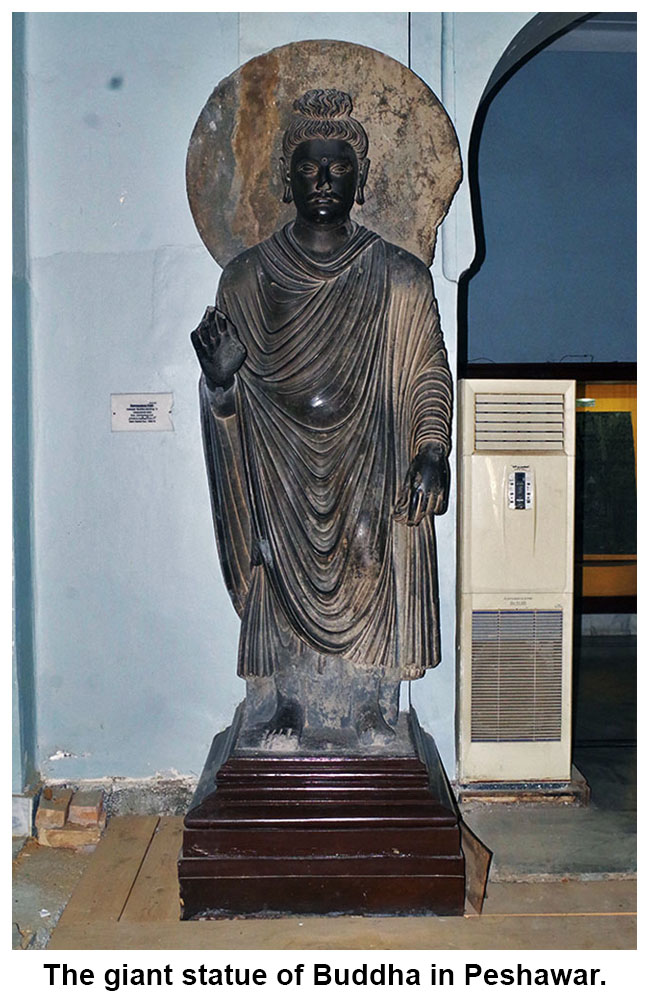
“The statue has been insured for $20 million,” he told Arab News. “In case of any damage to it, the money will be paid to Peshawar Museum.”
This is the first time the statue will be taken to an international exhibition. “Every exhibition has a central attraction,” Samad told Arab News. “This sculpture will play that role in Switzerland.”
The KP administration is promoting religious tourism, he said, adding that the province was not only home to the popular Gandhara civilization but is also sacred to Hindus and Sikhs.
“Last year, we did an exhibition about Buddhism in South Korea and displayed 42 objects for three months,” Samad said.
“Young people who’ve been brought up in Buddhist lands after the 9/11 attacks don’t know much about Pakistan, especially KP, and its significance to their religion. We want to raise awareness about it throughout the world.”
Tourists from around the world visit Switzerland and its museums, and their encounter with the Buddha statue will help promote a positive image of Pakistan, Samad said.
The statue is 2,000 years old, said one of the department’s research officers, Nawaz-ud-Din, adding: “It was discovered during British rule in Seri Bahlol in Mardan in 1909, and handed over to Peshawar Museum in 1911.”
Seri Bahlol is a world heritage site located about 70 km northwest of KP’s provincial capital Peshawar.
Nawaz-ud-Din said the statue is 365 cm high and 46.42 cm wide, and the museum has 4,147 other objects related to Buddhism.
Peshawar Museum was established in 1907. Its previous name was Victoria Hall, as it was established in Queen Victoria’s memory during British rule.


2000-year-old Buddha statue from Peshawar to be exhibited in Switzerland


2000-year-old Buddha statue from Peshawar to be exhibited in Switzerland

Pakistan assembly speaker warns opposition against anti-state remarks in parliament
- Ayaz Sadiq says criticism of judiciary and armed forces will not be allowed on assembly floor
- He calls violence during protests unacceptable, vows neutrality as National Assembly speaker
ISLAMABAD: Pakistan’s National Assembly Speaker Sardar Ayaz Sadiq said on Saturday that opposition lawmakers would not be allowed to speak against Pakistan, the judiciary or the armed forces on the floor of parliament, calling such remarks unacceptable.
Speaking to reporters during a visit to the eastern city of Lahore, Sadiq said parliamentary debate must remain within constitutional and legal limits, while reiterating his commitment to act impartially as speaker.
“No one will be allowed to speak against Pakistan, the judiciary or the armed forces on the floor of the National Assembly,” Sadiq said. “Negative or controversial remarks about judges or the armed forces are unacceptable.”
His comments come amid heightened political tensions after opposition groups held protests in the past, criticizing state institutions and targeting government and military properties.
The speaker said peaceful protest was a democratic right but drew a sharp line at violence and vandalism.
“Protest is the right of every citizen in a democratic society, but it must remain peaceful and within the bounds of the constitution and the law,” he continued, adding that arson, damage to property and the use of sticks or weapons in the name of protest were “unacceptable” and posed a threat to the rule of law.
“No opposition lawmaker will be allowed to speak on the National Assembly floor if they speak against Pakistan,” Sadiq said.
The speaker also noted the country’s economic indicators were gradually improving, citing an increase in foreign exchange reserves, and said Pakistan had further strengthened relations with countries including the United States, China, Russia, Türkiye and Saudi Arabia.


