MOSCOW: Russia’s improving economy has removed the main impetus for privatizations planned for this year, allowing policymakers who always doubted the wisdom of selling state assets to re-gain the upper hand, according to interviews with multiple officials.
Russia’s finance ministry initially planned to raise 138 billion roubles from privatization this year, mainly from selling a stake in the shipping company Sovcomflot and reducing its holdings further in VTB, the country’s No. 2 bank.
At the beginning of the year, the sell-offs were vital to fill state coffers, temporarily silencing those in the government and the Kremlin who do not believe the state should divest its assets.
But since then, the price of oil has risen and the finance ministry has raised around 1.4 trillion roubles ($24.2 billion) so far this year on the domestic rouble debt market via its treasury bonds.
As a result, the supporters of state ownership — who have been growing in influence during Vladimir Putin’s 17 years in charge — are back in control, according to people familiar with debates among policy-makers.
The privatization of VTB was postponed until after Western sanctions that apply to the bank are lifted, while the stake sale in Sovcomflot was postponed from the middle of the year to an unspecified time.
“The transfer of property should not be a goal in its own right. The goal should be a proper level of competition,” Russian Economy Minister Maxim Oreshkin told Reuters.
“There are almost no fiscal reasons left for privatization,” he said.
The price of Brent crude oil was over $59 per barrel on Friday, a 7 percent increase from the year-start. In March, prices were falling below $50 per barrel, hitting budget revenues.
Disposing of state assets has for years been a tough sell inside Russia’s elite.
Since Putin took power in 2001, the opposite trend has dominated, with state-owned national champions such as oil major Rosneft acquiring assets that had been privatized after the collapse of Communism.
The need to find cash for the budget, at a time when Western sanctions made it harder for Russia to raise debt on international capital markets, opened a brief window for the pro-market camp. That has now shut.
With the imperative of plugging holes in the budget gone, other arguments against privatizations have re-emerged.
They include the fact that sanctions drive down the price Russia can command for selling state assets, and a belief that state firms can be just as efficient as private companies.
A fresh package of sanctions signed into law by US President Donald Trump has added to investor uncertainty about buying Russian assets.
“We have companies which mainly are of systemic importance or have a significant influence on the markets... The state can lose the control as a result of the sale,” finance minister Anton Siluanov said in July.
“Should we do this now when the (new) sanctions have hung over Russia and the companies are clearly undervalued?”
The central bank had to bail out two of Russia’s biggest private banks, Otrkitie and B&N Bank, while state-owned banks such as Sberbank thrive, giving extra ammunition to the pro-state camp.
“The example of Sberbank compared to the private banks is clearly showing that in general, the owner is not as important as risk management,” Deputy Finance Minister Vladimir Kolychev said.


![]()
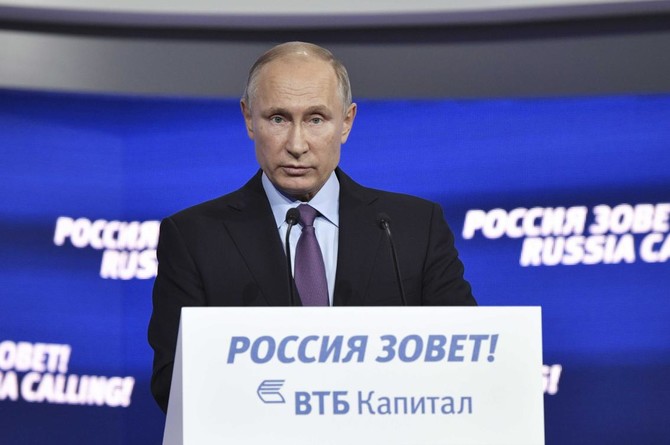
Russia’s improving economy leaves privatization out in the cold
Russia’s improving economy leaves privatization out in the cold
Latest updates


Recommended


© 2026 SAUDI RESEARCH & PUBLISHING COMPANY, All Rights Reserved And subject to Terms of Use Agreement.