

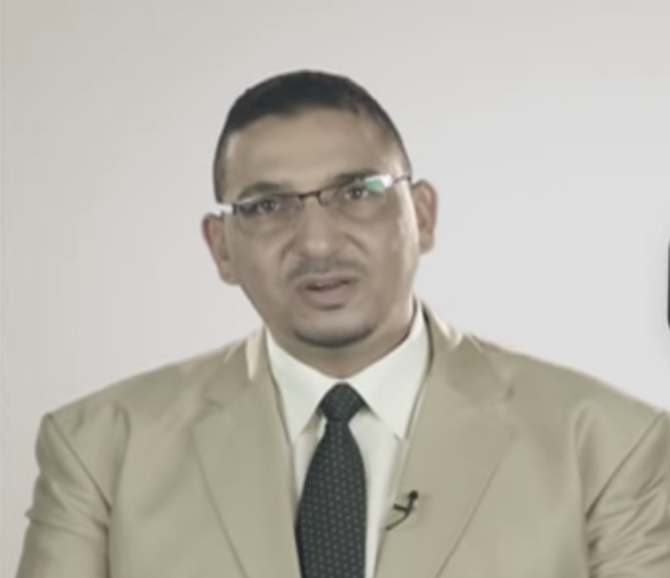
RABAT, Morocco: A former radical preacher is the unlikely instigator of a debate on a topic long seen as off-limits in Muslim-majority Morocco: women’s inheritance rights.
The country’s Islamic family laws allocate female heirs half the amount men receive on the death of a relative.
Abdelwahab Rafiki, a former hard-line cleric who served time in jail following jihadist bombings in Casablanca, says it is time that changed.
“I invite... religious scholars, sociologists and human rights actors to open a dialogue, primarily in order to uphold justice,” he said.
Rafiki, also known as Abou Hafs, was one of around 100 male writers, journalists and artists who published a book in April called “Men defend equality in inheritance.”
He also appeared on a prime-time television show on the popular 2M channel, arguing that the social roles of men and women had changed since the early days of Islam, meaning it was time for a debate on inheritance rules.
Since his TV appearance, he said, “I have been threatened with death and excommunicated, but I also received many messages of support.”
The 43-year-old was once regarded as a leader of the Salafist-jihadist movement in Morocco.
He was among 8,000 people arrested after jihadist bombings in Casablanca in 2003 killed 45 people.
Death threats
Sentenced to 30 years in prison, he was pardoned in 2012. Last year he stood for election to parliament representing Istiqlal, a conservative nationalist party.
His efforts to spark a debate on inheritance have won him plaudits from the liberal media and condemnation from his former peers.
“Thanks to 2M and Abou Hafs, a new step has been taken in Morocco: equality between men and women in matters of inheritance can now be raised in the public sphere,” local site Medias 24 said.
Weekly magazine TelQuel said he had begun “dismantling one by one the dogmas of radical Islam.”
But Abou Hafs has also received anonymous death threats on social media and been expelled from a national organization for religious scholars.
He has been denounced by the likes of Mohamed Fizazi and Hassan Kettani, preachers who were also jailed and later pardoned after the Casablanca attacks.
“He didn’t just turn his coat inside out, he tore it up,” Fizazi said.
Kettani said inheritance rules were not just a “red line” but an “impassable wall.”
Islamic scholars argue that the Qur'an allocates women half the inheritance given to male heirs because men are responsible for protecting women and providing for them.
Correcting injustice
They say the rules were a major improvement on women’s rights in pre-Islamic Arabia.
But Abou Hafs argues that the issue is open to “ijtihad” — the process of interpretation by religious scholars.
“The issue of inheritance must be consistent with evolutions in society” in order to “protect” Islam, he told AFP.
It is not the first time the subject has triggered controversy.
In 2015 Morocco’s official National Council of Human Rights (CNDH) called for women to be guaranteed the same inheritance rights as men, arguing that “unequal inheritance legislation” made women more vulnerable to poverty.
Outraged conservatives rejected any debate on the issue and the ruling Justice and Development Party (PJD) slammed the organization for its “irresponsible recommendation.”
But Nouzha Skalli, a former women’s rights minister, said the lines are moving.
“Until recently, the question was taboo — you couldn’t even debate the subject,” she said.
“As soon as you said the word ‘inheritance’ you were accused of blasphemy. Today, the debate can be held openly.”
“The time has come to break the taboo, which hides major injustices against women,” she said. “The Qur'an says that God is against injustice.”


