JERUSALEM: The Israeli military said Sunday that it was establishing a new safe corridor to deliver aid into southern Gaza. But days later, this self-declared “tactical pause” has brought little relief to desperate Palestinians.
The United Nations and international aid organizations say a breakdown in law and order has made the aid route unusable.
With thousands of truckloads of aid piled up, groups of armed men are regularly blocking convoys, holding drivers at gunpoint and rifling through their cargo, according to a UN official who spoke on condition of anonymity because he was not authorized to brief the media on the issue.
He said lawlessness has emerged as the main obstacle to aid distribution in southern Gaza — where an estimated 1.3 million Palestinians displaced from Rafah, or more than half of Gaza’s entire population, are now sheltering in tent camps and cramped apartments without adequate food, water, or medical supplies.
Here is a closer look at the security challenges facing the UN and aid organizations.
Israel’s ‘tactical pause’ stymied
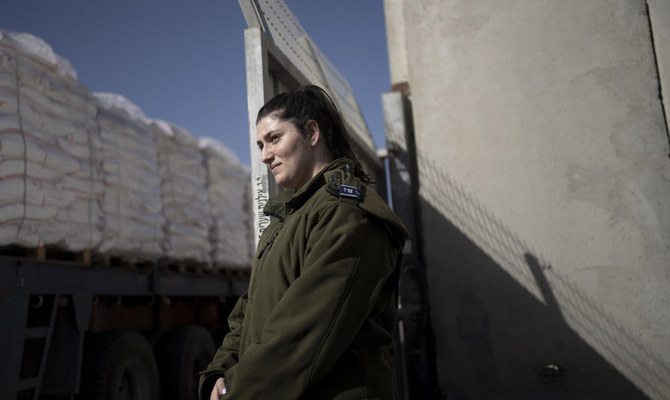
Israel said Sunday it would observe daily pauses in combat along a route stretching from Kerem Shalom — the strip’s only operational aid crossing in the south — to the nearby city of Khan Younis. Before the pause, aid organizations had reported that the need to coordinate trucks’ movement with the Israelis in an active combat zone was slowing aid distribution.
The UN official familiar with the aid effort said that there has been no sign of Israeli activity along the route. The UN tried to send a convoy of 60 trucks down the road Tuesday to pick up aid at Kerem Shalom. But 35 of the trucks were intercepted by armed men, the official said.
In recent days, armed men have moved closer to the crossing and set up roadblocks to halt trucks loaded with supplies, the UN official said. They have rifled through the pallets in search of smuggled cigarettes, a rare luxury in a territory where a single smoke can go for $25.
The surge in lawlessness is a result of growing desperation in Gaza and the power vacuum that left by Hamas’s waning power over the territory, said Mkhaimar Abusada, an associate professor of political science at Al-Azhar University in Gaza who is now in Cairo.
With the territory’s police force targeted by Israel, he said, crime has reemerged as an untreated issue in Gaza.
“After Hamas came to power, one of the things that they brought under their control was the lawlessness of the so-called big clans,” said Abusada. “Now, that’s left for the Palestinians on their own to deal with it. So once again, we are seeing shootings between families, there are thefts, all the bad things are happening.”
UNRWA, the UN agency for Palestinian refugees, used to deploy local Palestinian police to escort aid convoys, but many refused to continue serving after airstrikes killed at least eight police officers in Rafah, the agency said.
Israel says the police are legitimate targets because they are controlled by Hamas.
Is any aid still getting into Gaza?
The situation has largely paralyzed aid distribution to the south — particularly since Gaza’s nearby Rafah crossing with Egypt was closed when Israel invaded the city early last month.
The UN official said that 25 trucks of flour used the route Tuesday. Some private commercial trucks also got through — many of which used armed security to deter groups seeking to seize their cargo. An AP reporter stationed along the road Monday saw at least eight trucks pass by, armed security guards riding on top.
Before Israel’s offensive into the city of Rafah, hundreds of fuel trucks routinely entered the area.
The UN has now begun rerouting some fuel trucks through northern Gaza. Farhan Haq, a UN spokesman, said five fuel trucks entered Gaza Wednesday. The UN humanitarian office reported that these were the first fuel deliveries since early June and supplies remain scarce.
Aid groups say only a ceasefire and a reopening of the Rafah crossing could significantly increase aid flow to the area.
The military body in charge of coordinating humanitarian aid efforts, COGAT, did not respond to multiple requests for comment.
Security concerns also afflict aid from US pier project
The US installed a pier off Gaza’s coast last month, aiming to provide an additional route for aid to enter Gaza. But the ambitious project has suffered repeated logistical and security setbacks.
Cyprus, a partner in the effort, said the pier was up and running again Thursday after being detached for a second time last week because of rough seas. COGAT said Thursday there were “hundreds of aid pallets awaiting collection and distribution by the UN aid agencies.”
But there, too, security concerns are hindering distribution of aid.
The UN suspended its cooperation with the pier on June 9 – a day after rumors swirled that the Israeli military had used the area in a hostage rescue operation that left over 270 Palestinians dead. Photos of the operation have shown an Israeli helicopter in the vicinity of the pier.
Both Israel and the US deny the pier was used in the operation. But the perception that the pier was used for military purposes could endanger humanitarian workers, and threaten humanitarian groups’ principles of of neutrality, the UN says.
Aid workers said they are working with the Israelis to find a solution, but that the security burden falls squarely on Israel’s shoulders.
UN and other humanitarian officials, including Samantha Power, head of the US Agency for International Development, met with Israel’s military chief and COGAT officials this week to seek solutions.
USAID said afterward that the meeting ended with promises of specific actions, but gave no details.


Israel’s pledge to guard an aid route into Gaza falls flat as lawlessness blocks distribution
https://arab.news/r8x6k
Israel’s pledge to guard an aid route into Gaza falls flat as lawlessness blocks distribution

- Aid workers said they are working with the Israelis to find a solution, but that the security burden falls squarely on Israel’s shoulders


As tensions flare on Israel-Lebanon border, war-torn communities struggle to rebuild
- The Lebanon strikes have killed at least 127 civilians, including children, since the ceasefire took hold, according to a November UN report
- The Israeli strikes into southern Lebanon continue, with several a week
METULA, Israel: Ilan Rosenfeld walks through the burnt-out shell of his former business, stepping over crackling pieces of clay plates that used to line his cafe and past metal scraps of Hezbollah rockets littering the rubble.
It’s all that’s left for him in this small, war-ravaged town — the northernmost in Israel, surrounded on three sides by Lebanon.
“Everything I had, everything I saved, everything I built – it’s all burned,” he said as he scanned the damage of the business he’d run for 40 years in Metula, which has long been at the crosshairs of flare-ups along the volatile border. “Every day I wake up, and all I have left are tears.”
Rosenfeld was among tens of thousands of people forced from their homes when war broke out between Israel and the militant group Hezbollah in October 2023, following Hamas’ attack in southern Israel.
One year into a shaky ceasefire on this heavily fortified border, Israel’s government says most of those displaced have returned to their homes in the north, where they struggle to pick up the pieces of their lives. Others are reluctant to come back, as Israel has stepped up attacks in Lebanon. Communities like Metula that were in the center of the conflict remain little more than ghost towns, most still half empty, with many people skeptical of their government’s promise to keep them safe.
The Israeli strikes into southern Lebanon continue, with several a week. Hezbollah has refused to completely disarm until Israel fully withdraws.
“The security situation is starting to deteriorate again,” Rosenfeld said, looking at the bomb shelters on a list recently distributed by the local government. “And where am I in all this? I can barely survive the day-to-day.”
In some towns on the Israel-Lebanon border, the return has been a trickle
Metula residents were among the 64,000 forced to evacuate and relocate to hotels and temporary homes farther south when Hezbollah began firing rockets over the border into Israel in fall 2023. Months of fighting escalated into a full-fledged war. In September 2024, Israel killed 12 and wounded over 3,000 in a coordinated pager attack and killed Hezbollah’s leader in a strike. A month later, the ceasefire deal was reached.
Today, residents have trickled back to the sprawling apple orchards and mountains as Israel’s government encourages them to go home. Officials say about 55,000 people have returned.
In Metula, just over half of the 1,700 residents are back. Yet the streets remain largely empty.
Many hoped to rebuild their lives, but they returned to find 60 percent of the town’s homes damaged from rocket fire, according to the local government. Others were infested and destroyed by rats. The economy — largely based on tourism and agriculture — has been devastated.
With many people, especially young families, reluctant to return, some business owners have turned to workers from Thailand to fill labor shortages.
“Most of the people who worked with us before the war didn’t come back,” said Jacob Katz, who runs a produce business. “We’ve lost a lot … and we can’t read the future.”
Rosenfeld’s modest cafe and farm were perched on a hill overlooking the border fence. Tourists would come to eat, camp in buses converted to rooms and enjoy the view. But now, the towns on the Lebanese side of the border have been reduced to rubble by Israel’s attacks.
Without a home, Rosenfeld sleeps in a small shelter next to the scraps that remain of his business. He has little more than a tent, a refrigerator and a few chairs. Just a stone’s throw away sit a military watch tower and two armored vehicles.
Israel’s government says it has invested hundreds of millions of dollars in border recovery efforts, that it plans to invest more in economic revival, and that residents can apply for support funds.
But Rosenfeld said that despite his requests for government assistance, he hasn’t received any aid.
He’s among residents and business leaders who say they feel forgotten. Most say they need more resources to rebuild.
“The Israeli government needs to do much more for us,” Metula deputy mayor Avi Nadiv said. “The residents who live on Israel’s northern border, we are Israel’s human shield.”
A spokesman for Zeev Elkin, a Cabinet minister overseeing reconstruction in the north, said the local government has not used funds allocated to reconstruction “due to narrow political and oppositional considerations.”
Hezbollah-Israel tensions are flaring
As Hezbollah refuses to disarm, Israel has accused Lebanon’s government of not doing enough to neutralize the militant group. The Lebanese army says it has boosted its presence over the border area to strengthen the ceasefire.
Israel continues to bombard what it says are Hezbollah sites. Much of southern Lebanon has been left in ruins.
The strikes are among a number of offensives Israel has launched – including those in Gaza, the West Bank and Syria – in what it calls an effort to crack down on militant groups.
The Lebanon strikes have killed at least 127 civilians, including children, since the ceasefire took hold, according to a November UN report. UN special rapporteur Morris Tidball-Binz said the strikes amount to “war crimes.” Israel has maintained that it has the right to continue strikes to protect itself from Hezbollah rearming and accuses the group of using civilians as human shields.
Last week, Israel struck the southern suburbs of the Lebanese capital of Beirut, killing Hezbollah’s top military commander. The group, still weakened by last year’s fighting, has not responded.
‘The army cannot protect me’
In Metula, signs of the tensions are everywhere. The local government’s list of public shelters reads: “Metula is prepared for an emergency.”
Explosions and gunfire periodically echo from military drills while farmer Levav Weinberg plays with his 10-, 8- and 6-year-old children. Weinberg, a military reservist, said his kids are too scared to ride their bikes on the street.
Weinberg, 44, and his family returned in July, skeptical of the government’s promise that everything was returning to normal but eager to keep their business alive.
Metula’s government continues to encourage people to come back, telling residents the region is safe and the economy will bounce back.
“Today we feel the winds of, let’s call it, the winds of war – but it doesn’t deter us,” Nadiv said. “Coming back to Metula – there’s nothing to be afraid of. ... The army is here. The houses are fortified. Metula is prepared for anything.”
Weinberg isn’t so sure. In recent weeks, he and his wife have considered leaving once again.
“The army cannot protect me and my family,” Weinberg said. “You sacrifice your family to live in Metula these days. It’s not a perfect life, it’s not that easy, and at some point your kids pay the price.”


