

How can Saudi firms move on from COVID-19 survival mode?

1 / 3
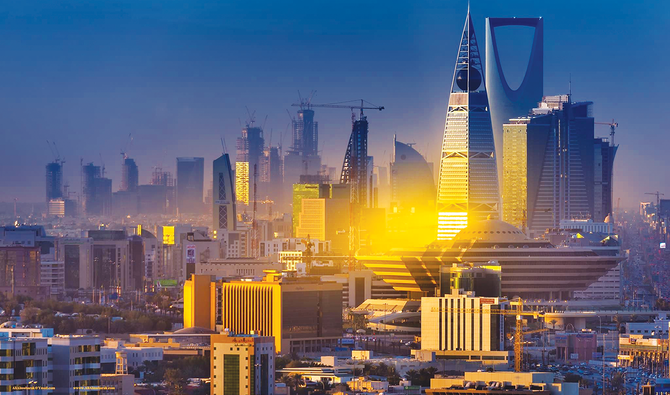
According to A&M, the domestic tourism in the Kingdom is growing fast and the trend is expected to continue with the opening of new resorts.
2 / 3
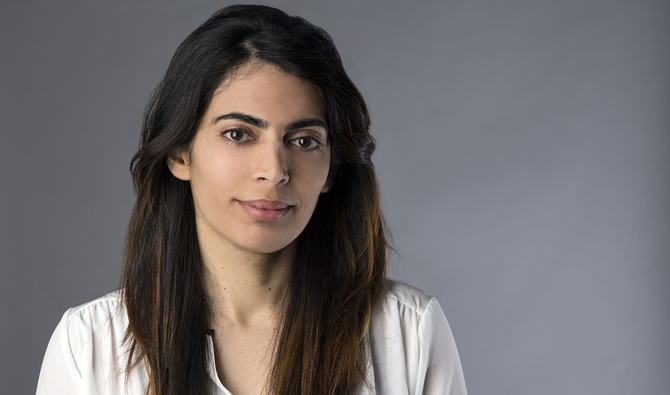
Dr. Saeeda Jaffar, Managing Director and Head of Middle East in Alvarez & Marsal. (Supplied)
3 / 3
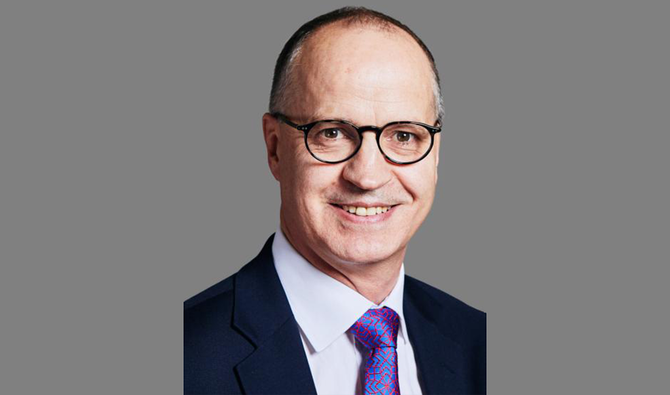
Paul Gilbert, Head of the A&M Turnaround and Restructuring practice in the Middle East. (Supplied)
Short Url
Updated 06 March 2021
Follow

How can Saudi firms move on from COVID-19 survival mode?

  • Alvarez and Marsal has been advising companies in the Kingdom on how best to pivot out of the tough times

JEDDAH: Alvarez and Marsal (A&M) is a New York-headquartered global professional services firm known in the industry as “the turnaround guys.” Legend has it that co-founder Bryan Marsal was one of the first people called when Lehman Brothers looked set to become the first major casualty of the global financial crisis in 2008.

A&M was founded in 1983 and now has representatives in 25 countries, including Dubai, from where it is now attempting to help Middle Eastern clients restructure their businesses after the challenges of 2020. As demand for its services grows, the company is aiming to increase its staff in the Middle East to 150 over the next five years, from 10 in 2015.

According to Paul Gilbert, head of A&M’s Turnaround and Restructuring practice in the Middle East, two of the most important steps management can take to overcome crises are to take total control over cash flow and to put in place a 12-month contingency plan to help the business stay afloat. Gilbert is currently working on the restructuring of Abu Dhabi’s NMC Health and has previously advised on rescue proceedings for South African Airways.

“Continue with cash preservation and cost control. Talk to your suppliers and landlords — those guys are suffering too, but they still want your business to come out of the other end,” Gilbert told Arab News. “These guys want to talk to you because they want to know that you’re going to be around at the end of it to help them rebuild their own businesses.”

According to Dr. Saeeda Jaffar, managing director and head of the Middle East at A&M, the pandemic has impacted companies in three major ways. There were companies that understood what was going on immediately and took “advantage of discontinuity” to find ways to succeed. Those companies already had a digital business model that supported their shift to digital, or had reacted nimbly to acquire a digital solution, so the transition was not as drastic as it has been for others.

The second group went into what Jaffar calls “hibernation mode,” by opting to minimize losses by decreasing costs, conserving cash, restricting loans and balances and generally steering away from bold decisions until the uncertainty passes.

The companies in the third group, Jaffar said, had weak business models and were unattractive to investors, so were bound to face difficulties.

One of the sectors that has suffered most has been retailers, according to Gilbert. “We’ve helped them across Europe with negotiations with landlords, with other creditors and helped them pivot from bricks-and-mortar stores to digital, and concentrated on helping them retain their customer base for when they come out,” he said. “Many of them are coming out of that period with a balance sheet that is either extremely stretched or has been restructured in a way that a number of lenders have now had to take equity back.”

Other sectors, including travel, tourism, aviation and real estate, have suffered tremendous losses during the pandemic as well.

In Saudi Arabia, Jaffar said that domestic tourism numbers exceeded expectations at the end of 2020.

“I think that’s a trend that will continue. That’s very much in line with the Vision 2030. We continuously see that there is a lot of development happening in the Kingdom, new resorts, new places, new developments that help continue to grow the tourism sector,” she said.

Jaffar believes it will take longer for aviation to recover than many industries, perhaps three to four years, she said.

On the other hand, technology — which Jaffar said has been the “backbone” for many other sectors — and healthcare — which has witnessed considerable investment in pharma consumables — have both prospered during the pandemic, a trend that Jaffar expects to continue in the near future.

Both A&M consultants suggest that as companies emerge from the pandemic, many will be looking at potential consolidation. Therefore, they said, mergers and acquisition activity will see a spike in 2021.

“There are a lot of strategic investors from the region that have learned over the last few cycles that investing now, when the valuations are more affordable, is probably a good time in terms of financial attractiveness,” said Jaffar.


Iran conflict intensifies risk for specialty insurers: Moody’s 

Updated 8 sec ago
Follow

Iran conflict intensifies risk for specialty insurers: Moody’s 

RIYADH: The Iran conflict has increased tail risk for Gulf specialty insurers according to Moody’s Ratings, although diversified firms are expected to face manageable losses under its baseline scenario.

The agency said the conflict has effectively blocked the Strait of Hormuz, through which just five vessels per day transited in the first eight days of March, down from a pre-conflict average of around 100 daily transits, citing Portwatch data. 

Moody’s baseline scenario assumed the conflict would be relatively short-lived with navigation through the passage eventually resuming at scale. In this scenario, losses are expected to be manageable for large, diversified insurers due to careful risk selection, aggregate claims limits and reinsurance protection. 

Amid widening conflict that has disrupted shipping in the region, the US International Development Finance Corp. on March 11 announced a $20 billion reinsurance facility, with Chubb serving as lead partner, according to Reuters. 

Without such war-risk coverage, ships and cargo worth hundreds of millions of dollars remain exposed to attacks in the waterway, through which about one-fifth of global oil flows normally pass. 

“Specialty insurers and reinsurers, which provide tailored coverage of complex risks such as marine, aviation and political violence, face increased likelihood of severe events leading to outsized claims as a result of the Iran conflict,” the report said. 

Moody’s added that “they are also benefiting from an increase in the price of political violence and terrorism coverage amid rising demand from businesses looking to protect assets in the region.” 

Since Feb. 28, the UK Maritime Trade Operations has recorded 17 incidents affecting vessels in the Arabian Gulf, Strait of Hormuz and Gulf of Oman, including 13 attacks and four reports of suspicious activity.

Marine insurers on March 5 issued notices of cancelation to terminate or reprice hull and cargo war-risk cover, which protects ships and cargo from damage caused by acts of war. 

“In fast-moving conflicts, war-risk cover can become more expensive or may be canceled on short notice depending on the wording,” said Pillsbury Winthrop Shaw Pittman LLP, the international law firm, in a blog post. 

The Lloyd’s Market Association confirmed that the vast majority of approximately 1,000 vessels in the Arabian Gulf, with an aggregate insured value exceeding $25 billion, remain covered in the London market, although at higher prices and under more restrictive terms. 

Beyond the immediate insurance implications, the disruption is creating cascading operational challenges for ship operators. “Longer maritime voyages can mean more fuel, more crew time and missed contractual delivery windows as chokepoints become chokeholds,” Pillsbury added. 

Protection and indemnity clubs, which cover liability risks such as oil spills, have reinstated some war-risk cover but halved liability limits for the Gulf to $250 million per event, forcing ship owners to retain more risk. 

On March 6, the US International Development Finance Corp. announced a reinsurance facility to cover losses up to approximately $20 billion on a rolling basis to facilitate passage through the Strait of Hormuz, initially focusing on hull and cargo coverage. 

Moody’s noted that prolonged vessel detention could trigger “blocking and trapping” provisions in war risk policies, allowing total loss claims after 12 months of detention, a scenario that could lead to clustered claims and legal disputes. 

Aviation sector on alert 

Aviation insurers face similar challenges, with airspace closures and missile activity increasing risks to aircraft on the ground at major regional airports. While insurers have largely maintained coverage, they have intensified monitoring and retain options for rapid repricing if conflict escalates. 

The report drew parallels to the Russia-Ukraine conflict, where approximately 400 aircraft valued at over $10 billion were detained in Russia, leading to complex litigation and ultimately exposing contingency war risk policies to significant losses. 

Moody’s added: “We see few parallels with the current conflict, where physical damage is the main driver of loss. We also estimate that there is more risk to primary war risk insurance than to contingency covers in this case.” 

Political violence coverage in focus 

Demand for political violence and terrorism insurance has risen sharply at significantly increased prices, a positive for insurer business volumes but one that increases exposure to potential further escalation. 

Loss reports are already emerging, with Bapco Energies in Bahrain reportedly notifying insurers of damage to its refinery complex from recent attacks. 

Legal uncertainty surrounds these policies, the report warns, as distinctions between war, terrorism and civil commotion are frequently contested in scenarios involving coordinated attacks or proxy actors. 

Outlook 

The concentration of high-value assets in the Gulf region increases potential for loss accumulation compared to recent geopolitical tensions such as Russia’s invasion of Ukraine. A prolonged conflict would raise the probability of larger, more complex loss scenarios. 

“War exclusion clauses will also provide some insulation, although these will likely face legal challenges in some cases,” Moody’s noted.

The conflict has also heightened cyber risk exposure for global insurers, with potential for Iranian state-aligned cyberattacks on Western corporates representing a material tail risk. 

Past Iranian state-backed cyberattacks have not breached cyber insurance attachment points, but legal uncertainty remains over the application of war exclusions. 

Energy insurance is considered less vulnerable due to well-dispersed assets, though attacks on infrastructure or prolonged production disruption could generate correlated claims across property, energy, marine and credit lines.